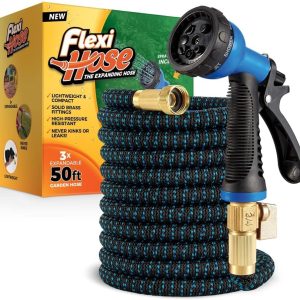
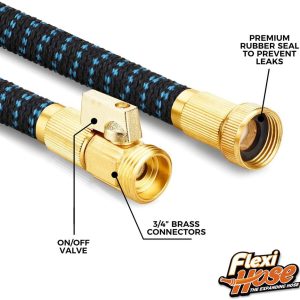
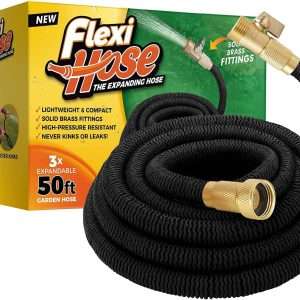

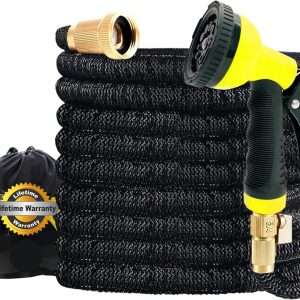
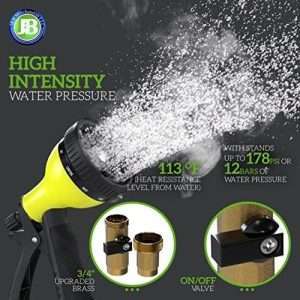
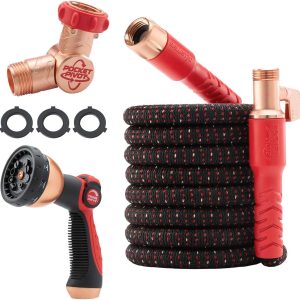
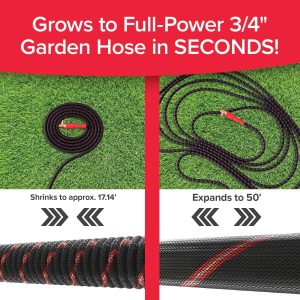
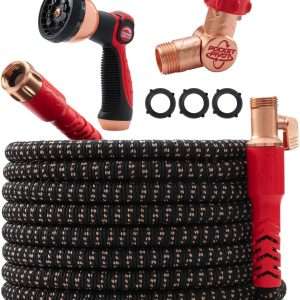
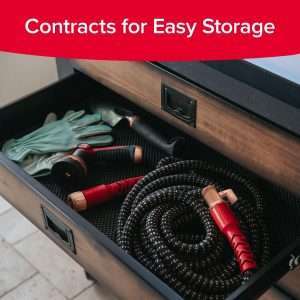
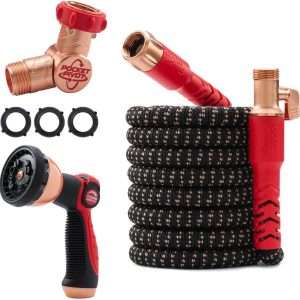
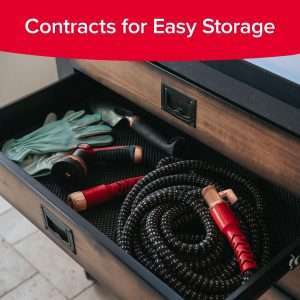
Expandable Garden Hose An expandable garden hose can be attractive when you want useful watering reach without storing a full-size rigid hose. It expands under water pressure and contracts after draining, which can reduce the amount of space it occupies between uses. That convenience depends on choosing the right length, fittings, pressure range, outer covering, and storage routine for the exact watering setup.Before comparing products, measure the real path from the faucet to the farthest place you water. Include corners, beds, furniture, and any route around sheds or planters. The hose should reach without being pulled tight at every turn. Extra length can add handling and storage bulk, so the goal is enough working allowance rather than simply choosing the longest option available.Choose Reach From the Actual Watering RouteA straight-line yard measurement can underestimate how much hose you need. Watering usually involves moving around beds, reaching behind pots, or walking past obstacles. Add enough allowance for those movements while avoiding a hose that spends most of its time coiled in excess. The length printed on a product listing should be checked together with the manufacturer instructions for how that model expands.If several watering zones are used, consider whether one hose can reach them comfortably from the existing faucet or whether a different setup would be easier. Frequent stretching at full extension can make handling awkward. A better fit leaves some freedom of movement near the final watering point and reduces the need to pull hard around corners or across delicate plants.Inspect Fittings, Valves, and Accessory CompatibilityThe connectors at each end are small parts with a large job. Check fitting size, material, thread compatibility, and how the connection is reinforced at the hose body. If an integrated shutoff valve is included, look at its position and whether it will be easy to operate with wet hands. Replacement washers and common connector sizes can also simplify routine maintenance.Nozzles and sprinklers add another compatibility check. A bundled nozzle is useful only when its spray patterns suit your tasks. Buyers who already own a preferred nozzle, wand, timer, or sprinkler should confirm that the hose connection matches those accessories. The current product page should remain the source for exactly what is included with each model.Understand Pressure, Expansion, and Flow ExpectationsExpandable hoses depend on water pressure to reach their working size, so low-pressure systems may not produce the same experience shown in product photos. At the same time, excessive pressure can put more stress on the hose and fittings. Check the manufacturer pressure guidance and any temperature limits before use rather than applying a single rule to every expandable hose.Flow can also be affected by hose length, connector size, nozzle setting, and the water source. If the hose will feed a sprinkler or another device that depends on steady flow, confirm the setup as a system. A lightweight hose used for hand watering may have different priorities from a hose expected to run a sprinkler for longer periods.Plan for Draining, Storage, and Seasonal CareAn expandable hose is easiest to store after the water is shut off and the hose is allowed to drain and contract. Avoid leaving it under pressure when it is not being used. Keep it away from sharp edges, hot surfaces, and unnecessary abrasion, then store it according to the manufacturer guidance for the exact material and construction.Cold-weather storage deserves attention where freezing conditions occur. Water left inside a hose or fitting can create problems when temperatures fall. Drain the hose thoroughly and follow the product instructions for winter storage. A compact basket, hanger, or shelf can help keep the hose off rough ground while still allowing it to dry before long-term storage.Expandable Hose Checks Before You OrderThese checks keep the comparison centered on reach, compatibility, pressure, and care instead of accessory count alone.Measure the faucet-to-farthest-point route and include working allowance around obstacles.Confirm fitting size and compatibility with your nozzle, wand, timer, or sprinkler.Review the exact product pressure and temperature guidance before use.Choose a storage location that allows draining and protects the hose from sharp edges.Use Hose Guides to Compare Length and ConstructionThe related category and guides below help compare expandable, standard, and metal hoses, choose practical length, and plan storage. Return to the individual product listing for the exact materials, connectors, included accessories, and current specifications.Browse Garden Hoses for the wider product range. Use Garden Hose Guides for broader buying guidance. Then compare Expandable Vs Standard Vs Metal Garden Hose, Garden Hose Length Guide 25 50 75 100 Feet, How To Drain Store And Winterize A Garden Hose.Choose the Hose That Fits the Whole Watering SetupA good expandable hose should work with the faucet, route, watering tools, water pressure, and storage space you already have. Compare the finalists as complete watering systems. The most useful model is the one that reaches comfortably, connects correctly, drains easily, and can be stored without creating another yard-care problem.Common Buyer QuestionsDoes an expandable garden hose need strong water pressure?It needs enough pressure to expand and provide useful flow, but the required range varies by model. Follow the exact product guidance.Should an expandable hose be drained after use?Yes, draining helps it contract for storage and avoids leaving the hose unnecessarily pressurized. Follow the manufacturer care instructions.
Detail Description
Expandable Garden Hose An expandable garden hose can be attractive when you want useful watering reach without storing a full-size rigid hose. It expands under water pressure and contracts after draining, which can reduce the amount of space it occupies between uses. That convenience depends on choosing the right length, fittings, pressure range, outer covering, and storage routine for the exact watering setup.Before comparing products, measure the real path from the faucet to the farthest place you water. Include corners, beds, furniture, and any route around sheds or planters. The hose should reach without being pulled tight at every turn. Extra length can add handling and storage bulk, so the goal is enough working allowance rather than simply choosing the longest option available.Choose Reach From the Actual Watering RouteA straight-line yard measurement can underestimate how much hose you need. Watering usually involves moving around beds, reaching behind pots, or walking past obstacles. Add enough allowance for those movements while avoiding a hose that spends most of its time coiled in excess. The length printed on a product listing should be checked together with the manufacturer instructions for how that model expands.If several watering zones are used, consider whether one hose can reach them comfortably from the existing faucet or whether a different setup would be easier. Frequent stretching at full extension can make handling awkward. A better fit leaves some freedom of movement near the final watering point and reduces the need to pull hard around corners or across delicate plants.Inspect Fittings, Valves, and Accessory CompatibilityThe connectors at each end are small parts with a large job. Check fitting size, material, thread compatibility, and how the connection is reinforced at the hose body. If an integrated shutoff valve is included, look at its position and whether it will be easy to operate with wet hands. Replacement washers and common connector sizes can also simplify routine maintenance.Nozzles and sprinklers add another compatibility check. A bundled nozzle is useful only when its spray patterns suit your tasks. Buyers who already own a preferred nozzle, wand, timer, or sprinkler should confirm that the hose connection matches those accessories. The current product page should remain the source for exactly what is included with each model.Understand Pressure, Expansion, and Flow ExpectationsExpandable hoses depend on water pressure to reach their working size, so low-pressure systems may not produce the same experience shown in product photos. At the same time, excessive pressure can put more stress on the hose and fittings. Check the manufacturer pressure guidance and any temperature limits before use rather than applying a single rule to every expandable hose.Flow can also be affected by hose length, connector size, nozzle setting, and the water source. If the hose will feed a sprinkler or another device that depends on steady flow, confirm the setup as a system. A lightweight hose used for hand watering may have different priorities from a hose expected to run a sprinkler for longer periods.Plan for Draining, Storage, and Seasonal CareAn expandable hose is easiest to store after the water is shut off and the hose is allowed to drain and contract. Avoid leaving it under pressure when it is not being used. Keep it away from sharp edges, hot surfaces, and unnecessary abrasion, then store it according to the manufacturer guidance for the exact material and construction.Cold-weather storage deserves attention where freezing conditions occur. Water left inside a hose or fitting can create problems when temperatures fall. Drain the hose thoroughly and follow the product instructions for winter storage. A compact basket, hanger, or shelf can help keep the hose off rough ground while still allowing it to dry before long-term storage.Expandable Hose Checks Before You OrderThese checks keep the comparison centered on reach, compatibility, pressure, and care instead of accessory count alone.Measure the faucet-to-farthest-point route and include working allowance around obstacles.Confirm fitting size and compatibility with your nozzle, wand, timer, or sprinkler.Review the exact product pressure and temperature guidance before use.Choose a storage location that allows draining and protects the hose from sharp edges.Use Hose Guides to Compare Length and ConstructionThe related category and guides below help compare expandable, standard, and metal hoses, choose practical length, and plan storage. Return to the individual product listing for the exact materials, connectors, included accessories, and current specifications.Browse Garden Hoses for the wider product range. Use Garden Hose Guides for broader buying guidance. Then compare Expandable Vs Standard Vs Metal Garden Hose, Garden Hose Length Guide 25 50 75 100 Feet, How To Drain Store And Winterize A Garden Hose.Choose the Hose That Fits the Whole Watering SetupA good expandable hose should work with the faucet, route, watering tools, water pressure, and storage space you already have. Compare the finalists as complete watering systems. The most useful model is the one that reaches comfortably, connects correctly, drains easily, and can be stored without creating another yard-care problem.Common Buyer QuestionsDoes an expandable garden hose need strong water pressure?It needs enough pressure to expand and provide useful flow, but the required range varies by model. Follow the exact product guidance.Should an expandable hose be drained after use?Yes, draining helps it contract for storage and avoids leaving the hose unnecessarily pressurized. Follow the manufacturer care instructions.