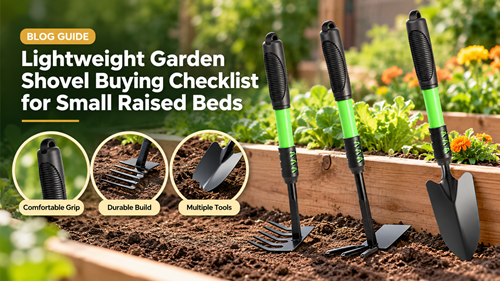

A Lightweight Garden Shovel can reduce fatigue in raised beds, but low weight is only useful when the blade size, handle length, and balance match the confined working area. Large long-handled shovels can be awkward between bed walls, while very small hand tools may demand too much bending or wrist force.
Raised beds also vary in soil depth and compaction. A tool that works well in loose potting media may flex or bounce in dense amended soil. The right buying checklist compares reach, blade geometry, grip, strength, and storage instead of using weight as the only measure.
How to Evaluate Lightweight Garden Shovel
Measure bed width and working access before choosing handle length. A shovel that reaches the center should still allow controlled movement without hitting the frame.
Compare the blade to the actual jobs: transplanting, mixing compost, loosening soil, and moving small quantities need different head shapes.
Balance matters as much as total weight. A slightly heavier tool can feel easier when the weight is close to the hands rather than concentrated at the blade.
Lightweight Garden Shovel decisions are easiest to defend when the product is tested against the exact space, material, plant, or route described above rather than a generic maximum claim.
Six Buying Checks That Matter
Match the Bed Size
When comparing raised bed gardening tools, Raised beds reward tools that can work between plants and edges without striking wood or metal borders. Compare overall length with the bed width and your preferred working position.
If you usually work from one side, a mid-length handle can reduce reaching while still keeping the head under control.
Choose a Compact Blade
When comparing compact garden shovel, A compact blade is easier to place around roots and irrigation lines. Check blade width and shoulder shape rather than judging the tool from a product photo alone.
Very narrow blades move less soil per scoop, so decide whether precision or volume matters more for your routine.
Keep Control in Small Beds
When comparing small bed gardening shovel, A small-bed shovel should enter the soil where you intend without disturbing neighboring plants. A pointed tip can help start in firm media, while a flatter edge may suit scooping.
Do not use a narrow planting shovel as a lever against bed walls or large stones; that can bend the shaft or loosen the handle.
Reduce Repetitive Effort
When comparing lightweight digging tool, Low tool weight can help during repeated shallow digging, but handle diameter and grip texture also influence hand fatigue.
Test whether gloves change the grip size. A handle that feels ideal bare-handed can become too thick once padded gloves are added.
Work Around Tight Corners
When comparing garden shovel for tight spaces, Tight spaces favor shorter heads and precise wrist control. Look for a clean connection between blade and handle so soil does not pack into a weak joint.
If the bed includes trellises or drip lines, check tool swing clearance before choosing a long handle.
Start with a Simple Tool
When comparing beginner garden shovel, Beginners usually benefit from a straightforward shovel that is easy to clean, store, and control rather than one with several mechanisms.
Choose quality construction and comfortable dimensions first; specialty shapes can be added later when a repeated task justifies them.
Where It Fits Best
A side-by-side task check is more useful than a generic “best for everyone” verdict. Use the table below to match the product to normal work and then verify the current product instructions before use.
| Situation | Practical Fit | What to Watch |
|---|---|---|
| Transplanting | Narrow pointed head | Root clearance |
| Mixing compost | Medium scoop | Blade stiffness |
| Loose soil | Light broad blade | Scoop volume |
| Dense soil | Rigid pointed blade | Shaft connection |
| Container work | Short hand shovel | Grip comfort |
| Raised bed center | Mid-length handle | Reach without overextension |
The table is intentionally conservative. The most reliable decision comes from matching the product to normal work rather than chasing the maximum capacity, longest reach, highest piece count, or strongest claim.
A Better Real-World Routine
Set up the work area before the first full task. Confirm the route, container, plant, soil condition, or material involved and use a light test first so fit and control can be checked without committing to the hardest job.
Keep a simple record of what worked: tool size, load, application amount, storage position, or setup. Repeatable decisions make future purchases and maintenance easier.
Before Each Use
- Measure bed width
- List main digging jobs
- Check blade width
- Compare handle length
- Test grip with gloves
- Confirm tool balance
- Inspect head-to-handle joint
- Plan dry storage
A repeatable routine makes comparison easier. Saving steps, improving control, or keeping a messy task organized without creating another problem are more meaningful advantages than a long list of secondary features.
Care, Storage, and Practical Limits
Brush soil from the blade after use, dry metal surfaces, and inspect the handle connection before compacted-soil work. Sharpen only when the manufacturer recommends it.
For broader technique and safety context, review Penn State Extension guidance on tool length, weight, and reduced garden strain. Always give the current product label, manual, or manufacturer instructions priority for rates, loads, assembly, cleaning, storage, and replacement parts.
Who Should Choose It
This setup fits gardeners working in raised beds, patio beds, and compact plots where precision and comfortable reach matter more than moving large quantities of soil.
A good purchase should reduce friction in the garden routine. If another product type solves the task with fewer compromises, choose that alternative instead of paying for features you will not use.
Final Buying Takeaway
A Lightweight Garden Shovel should feel controlled rather than merely light. Match blade size, handle length, grip, and strength to the bed and soil, then choose the simplest tool that performs those repeated jobs well.
Lightweight Garden Shovel should be treated as a practical tool or product choice: verify current specifications, use the first few sessions as a test period, and keep the setup that remains controlled, easy to maintain, and consistent.
Frequently Asked Questions
How light should a raised-bed shovel be?
There is no universal target. Choose a weight you can control repeatedly without sacrificing the rigidity needed for your soil.
Is a short handle always better for raised beds?
No. Short handles improve precision, while mid-length handles can reduce bending and reaching in wider beds.
What blade shape works for transplanting?
A narrower pointed blade usually gives better placement around roots and neighboring plants.
Can a lightweight shovel handle compacted soil?
Only if the blade and shaft are designed for it. Avoid forcing a light tool beyond its intended use.
Should beginners buy a shovel set?
Start with one or two tools that fit your common tasks; add specialty tools after you know what is missing.
