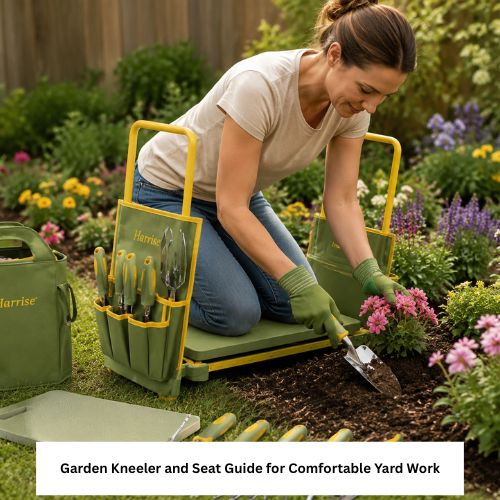
A garden kneeler can reduce direct pressure from hard soil and help some gardeners move between low tasks and seated breaks. The right design depends on knee comfort balance mobility body size frame height ground conditions and available storage.
A kneeler or seat is not medical equipment. People with joint pain balance concerns recent surgery or limited mobility should ask a qualified health professional which positions and supports are suitable.
How to Choose a Garden Kneeler and Seat
Measure the height that feels manageable when lowering and standing. Check the pad width frame opening and seat height rather than relying only on photos.
| Design | Best use | Main benefit | Main limitation | What to verify |
| Reversible kneeler seat | Low garden work and short seated breaks | Two functions in one frame | Turning it over may be awkward | Frame locks pad width and seat height |
| Flat kneeling pad | Beds containers and quick tasks | Light and easy to carry | No handles for standing assistance | Thickness surface grip and water resistance |
| Folding garden stool | Pruning harvesting and pot work | Reduces time spent kneeling | May sink into soft soil | Leg spread seat size and stated load guidance |
| Rolling garden seat | Long rows and repetitive work | Moves between plants | Needs smooth level ground | Wheel stability turning and brake design |
| Standing work surface | Potting and transplanting | Keeps tasks near waist height | Requires permanent space | Work height stability and weather care |
Check Padding and Frame Fit
The pad should support both knees without forcing them against metal edges. Dense padding may resist bottoming out better than very soft foam but product specific comfort test.
The garden kneeling pad category can help buyers compare relevant pad styles although exact thickness dimensions materials and surface grip should be verified before buying.
Check that side rails are positioned where the user can grip them without twisting the wrists or shoulders.
Pair the Seat With Lightweight Tools
A garden lightweight shovel tool may reduce the effort needed for small digging and transplanting tasks but buyers should verify tool length head size handle material grip shape and intended soil conditions.
Keep frequently used tools within easy reach so repeated bending and twisting are reduced. Do not place sharp tools beneath the seat or on the ground where they hidden by plants.
Compare Tool Sets for Seated Work
The WORKPRO gardening tool set may provide several compact tools for raised beds and seated tasks but buyers should confirm tool weight handle diameter storage method and current included pieces.
Choose only the tools needed for the job. Carrying an oversized set can add unnecessary weight and clutter around the kneeler.
Protect Hands and Improve Grip
Breathable leather garden gloves with grip can support hand protection during low garden tasks but users should verify glove size cuff length thorn resistance cleaning guidance and compatibility with wet conditions.
Gloves should allow the fingers to close around handles without excessive squeezing. Replace pairs that become stiff torn or slippery.
Consider a Portable Bench Alternative
A three in one collapsible wagon that converts to a bench may provide transport and temporary seating but it is not a dedicated kneeler so buyers should verify seat setup frame locks stability ground suitability and product use guidance.
Never use a wagon bench on a slope or unstable surface. Keep fingers clear of folding joints and do not exceed the stated use limits.
Setup and Safe Use
Open the frame completely and confirm every lock before placing body weight on it. Use the garden kneeler on firm level ground and keep the area free from hoses tools stones and loose edging.
Move slowly when sitting standing or turning. Handles can assist positioning but should not be treated as medical grab bars unless the manufacturer states that purpose.
Troubleshooting and Maintenance
If the frame rocks check the ground fasteners hinges and feet. If the pad slides inspect its attachment and surface condition. Stop using the product when welds bend hinges loosen or fabric tears.
Brush off soil after use and dry the frame before storage. Follow the care instructions for foam fabric metal and plastic parts.
Common Buying Mistakes
Avoid choosing by advertised capacity alone ignoring seat height or assuming every wide pad fits the frame. Buyers also forget folded size replacement pads handle comfort and the effort needed to rise from the selected height.
Kneeling Support Buying Checklist
Use this garden kneeler checklist before ordering.
- Measure knee spacing pad width and preferred seat height.
- Check frame locks feet hinges and stated load guidance.
- Confirm the ground type is suitable for the design.
- Review padding density cover material and edge clearance.
- Test whether handles support a comfortable wrist position.
- Check folding setup carrying weight and storage space.
- Review cleaning maintenance replacement pads warranty return policy delivery and support.
- Verify before buying when dimensions or intended use are unclear.
Conclusion
A garden kneeler should match the gardeners mobility knee spacing preferred working height and storage needs while remaining stable on the intended ground. Shop gardening tools offers relevant pads lightweight tools gloves and portable bench alternatives for more comfortable gardening routines.
FAQ
Is a kneeler better than knee pads?
A kneeler provides a larger shared surface while wearable pads move with the gardener. Comfort and mobility needs determine the better option.
What seat height is best?
Choose a height that allows controlled sitting and standing without deep strain. Verify the actual measurement before buying.
Can a kneeler be used on gravel?
Only when the feet remain stable and the product instructions permit that surface. Loose gravel can cause rocking or slipping.
How should a kneeler be stored?
Clean and dry it first then store it where hinges padding and fabric are protected from moisture and extreme conditions.
