The right flower gardening tools help prepare beds, place bulbs and transplants, remove weeds, prune suitable growth, and water without damaging blooms. Tool selection should reflect flower type, bed depth, stem thickness, spacing, and the gardeners hand comfort.
Shop gardening tools offers floral sets, gloves, cutting accessories, and watering products, but buyers should verify current contents, materials, dimensions, care instructions, and delivery terms.
How to Choose Flower Gardening Tools
Start with a hand trowel for planting, a small cultivator for loosening the surface, and a weeder for work between close plants. Add pruning equipment only when the flowers or shrubs require cutting and the blade capacity suits the stems.
Rose pruning gloves can provide added forearm coverage when the size, material, cuff length, and thorn protection suit the plants being handled.
Grafting and pruning blades chosen by compatible tool model, intended cut, and safe replacement procedure rather than appearance alone.
| Tool | Main Use | Main Benefit | Possible Limitation | Verify Before Buying |
| Hand trowel | Bulbs and transplants | Precise planting holes | Small blade is slow for large beds | Blade width and handle fit |
| Hand cultivator | Surface loosening | Works between plants | Can catch shallow roots | Tine spacing and work depth |
| Hand weeder | Removing young weeds | Less disturbance near flowers | May not remove deep roots | Tip design and safe handling |
| Pruning tool | Deadheading and approved cuts | Controlled stem removal | Wrong blade can crush stems | Cut capacity lock and blade care |
| Watering can | Targeted watering | Keeps flow near root areas | Heavy when full | Spout reach and flow pattern |
A long spout flower watering can can direct water near plant bases when its filled weight and sprinkler pattern suit the bed.
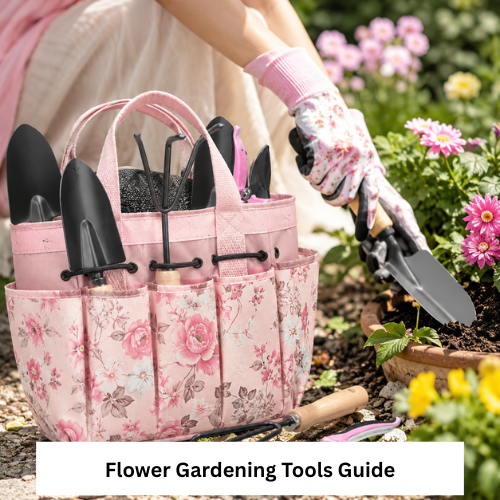
A floral garden tool set useful for beginners when each included piece matches the planned flowers and no essential tool is replace by a decorative duplicate.
A grafting and pruning scissors example can help buyers compare blade style, locking method, handle design, and listed maintenance guidance.
Setup Safety and Plant Compatibility
Check plant care guidance before pruning because not every flower should be cut at the same time or in the same way. Use a clean tool appropriate for the stem and keep fingers away from the cutting path.
Inspect gloves for holes, blades for damage, and handles for looseness. Wear eye protection when clipping stiff or springy growth and store cutting tools closed and secured.
When planting bulbs or small transplants, verify spacing and depth for the specific flower. Avoid pushing a trowel into hidden irrigation lines, edging, or landscape fabric.
Troubleshooting Flower Bed Work
If stems are crushed instead of cut, stop and inspect the blade condition, cut capacity, and tool type. If weeds return quickly, confirm whether the root was remove and avoid disturbing the flower roots excessively.
If water pools on the surface, reduce the flow and allow time for absorption. If soil washes away from bulbs or transplants, use a gentler sprinkler pattern and direct water beside the plant.
Cleaning Maintenance and Storage
Remove sap, soil, and plant debris using the maker approved method. Dry metal parts and follow approved sharpening or lubrication guidance for cutting tools.
Store flower gardening tools in a dry secure place with blade covers or locks engaged. Replace damaged handles, worn springs, unsafe gloves, or incompatible blades rather than continuing to use them.
Buying Checklist
- Match tools to planting pruning weeding and watering jobs
- Check flower spacing bulb depth and stem thickness
- Confirm handle grip glove size and user comfort
- Inspect blades locks joints tines and protective covers
- Verify watering reach flow and filled weight
- Review cleaning sharpening lubrication and storage needs
- Check warranty returns replacement parts delivery and support
- Verify every product specific detail before buying
Conclusion
Well chosen flower gardening tools should provide control around delicate roots, stems, and blooms. Select only the planting, pruning, weeding, and watering tools the flower bed requires, then inspect and maintain them throughout the growing season.
FAQ
What tools are useful for planting flowers?
A hand trowel, cultivator, gloves, and controlled watering tool cover many bulb and transplanting tasks.
Are pruning shears needed for every flower garden?
No. Add them when the specific flowers or shrubs require deadheading or pruning and use the correct cut capacity.
What gloves are suitable for roses?
Choose gloves with suitable hand fit, grip, cuff coverage, and thorn protection and verify the product details before buying.
How should pruning tools be cleaned?
Follow the maker approved method for removing sap and debris, then dry and store the tool safely.
How can flowers be watered without damaging blooms?
Direct a gentle flow toward the soil near the base and avoid a strong stream against petals or exposed roots.
