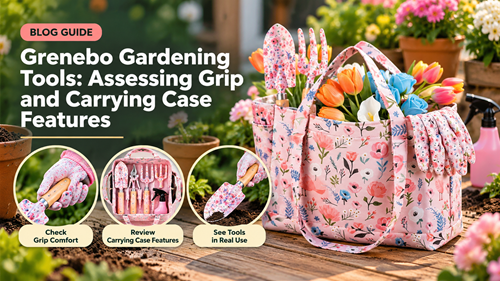

Grenebo Gardening Tools combine hand tools with organized storage, so the buying decision should cover both grip comfort and the carrying case. A set can look convenient on a product page yet become tiring when handles are too thick, tools are front-heavy, or the bag collapses when the heavier pieces are loaded.
Evaluate the set in the order you will use it: grip, control, tool construction, storage pockets, then transport. That approach keeps the carrying case from hiding weaknesses in the tools themselves.
How to Evaluate Grenebo Gardening Tools
Grip fit changes with hand size and gloves. A soft surface is not automatically ergonomic if the handle is too thick or forces the wrist into an awkward angle.
The case should support the tools without sagging or allowing sharp edges to rub against fabric. Exterior pockets are useful only when they hold the tools securely.
Consider transport distance. A fully loaded tote can feel very different from an empty bag displayed in a listing.
Grenebo Gardening Tools decisions are easiest to defend when the product is tested against the exact space, material, plant, or route described above rather than a generic maximum claim.
Six Buying Checks That Matter
Review the Grenebo Set
When comparing Grenebo garden tool set, Use the current product page to confirm the exact tools, bag style, and handle design included in the set.
If the configuration has changed, judge the current pieces rather than relying on older reviews or photos.
Focus on Handle Fit
When comparing ergonomic gardening tools, Ergonomic design starts with fit. Compare handle diameter, texture, weight distribution, and the wrist angle created by the tool head.
A cushioned grip can reduce surface pressure but will not correct a tool that is too heavy or too long for the user.
Inspect the Carrying Case
When comparing gardening tools with case, Look for a reinforced base, strong stitching, secure handles, and pockets that keep tools from shifting.
A case that is easy to rinse or brush clean will be more practical after repeated contact with soil and damp tools.
Test Handle Security
When comparing garden tool grip, Grip material should stay secure on the handle instead of twisting when force is applied. Texturing should improve control without creating sharp pressure points.
Check the transition between the grip and metal shaft because loose collars or gaps can collect moisture and dirt.
Plan Storage and Transport
When comparing gardening carrying case, A carrying case should solve a real storage problem: moving tools from shed to beds, keeping them off a garage floor, or organizing a small patio space.
Do not overload the tote with unrelated tools if the handle and base were designed only for the original set.
Choose Comfort over Appearance
When comparing comfortable garden tools, Comfort is measured during the task, not by how padded the handle looks. Use short test sessions to notice squeezing, wrist bending, or hand fatigue.
If a tool causes numbness, sharp pain, or loss of control, stop and choose a different size or design rather than adapting to poor fit.
Where It Fits Best
A side-by-side task check is more useful than a generic “best for everyone” verdict. Use the table below to match the product to normal work and then verify the current product instructions before use.
| Situation | Practical Fit | What to Watch |
|---|---|---|
| Grip diameter | Hand comfort | Too thick or too thin |
| Grip texture | Control with gloves | Slippery when wet |
| Tool balance | Reduced fatigue | Heavy head |
| Tote base | Stands upright | Sagging fabric |
| Pocket depth | Secure transport | Sharp tips exposed |
| Handle stitching | Loaded carrying | Weak seams |
The table is intentionally conservative. The most reliable decision comes from matching the product to normal work rather than chasing the maximum capacity, longest reach, highest piece count, or strongest claim.
A Better Real-World Routine
Set up the work area before the first full task. Confirm the route, container, plant, soil condition, or material involved and use a light test first so fit and control can be checked without committing to the hardest job.
Keep a simple record of what worked: tool size, load, application amount, storage position, or setup. Repeatable decisions make future purchases and maintenance easier.
Before Each Use
- Compare grip diameter
- Wear normal garden gloves
- Check tool balance
- Inspect grip-to-shaft joint
- Load the tote realistically
- Check pocket depth
- Inspect base stiffness
- Plan drying before storage
A repeatable routine makes comparison easier. Saving steps, improving control, or keeping a messy task organized without creating another problem are more meaningful advantages than a long list of secondary features.
Care, Storage, and Practical Limits
Clean and dry tools before placing them in the carrying case, brush soil from pockets, and allow a damp tote to dry fully before closing it in a cabinet or shed.
For broader technique and safety context, review Penn State Extension advice on handle materials, balance, tool heads, and proper fit. Always give the current product label, manual, or manufacturer instructions priority for rates, loads, assembly, cleaning, storage, and replacement parts.
Who Should Choose It
Grenebo sets suit gardeners who prefer a coordinated group of hand tools and need a portable storage case for moving between beds, patio containers, or a shed.
A good purchase should reduce friction in the garden routine. If another product type solves the task with fewer compromises, choose that alternative instead of paying for features you will not use.
Final Buying Takeaway
Grenebo Gardening Tools should be judged as a working system: comfortable grips, secure tool construction, and a carrying case that stays organized after real use. The case adds value only when the tools already fit the user and tasks.
Grenebo Gardening Tools should be treated as a practical tool or product choice: verify current specifications, use the first few sessions as a test period, and keep the setup that remains controlled, easy to maintain, and consistent.
Frequently Asked Questions
Are soft grips always more comfortable?
No. Diameter, balance, wrist position, and glove use can matter as much as the surface material.
Should the carrying case stand upright?
It is helpful for access and storage, but stability depends on the base and how the tools are loaded.
Can I add extra tools to the tote?
Yes if the bag can handle the added weight and sharp edges remain safely contained.
How should the case be cleaned?
Follow its material instructions, remove soil, and let it dry fully before storage.
What is the most important grip test?
Make sure you can hold and control the tool without excessive squeezing or wrist bending.
