
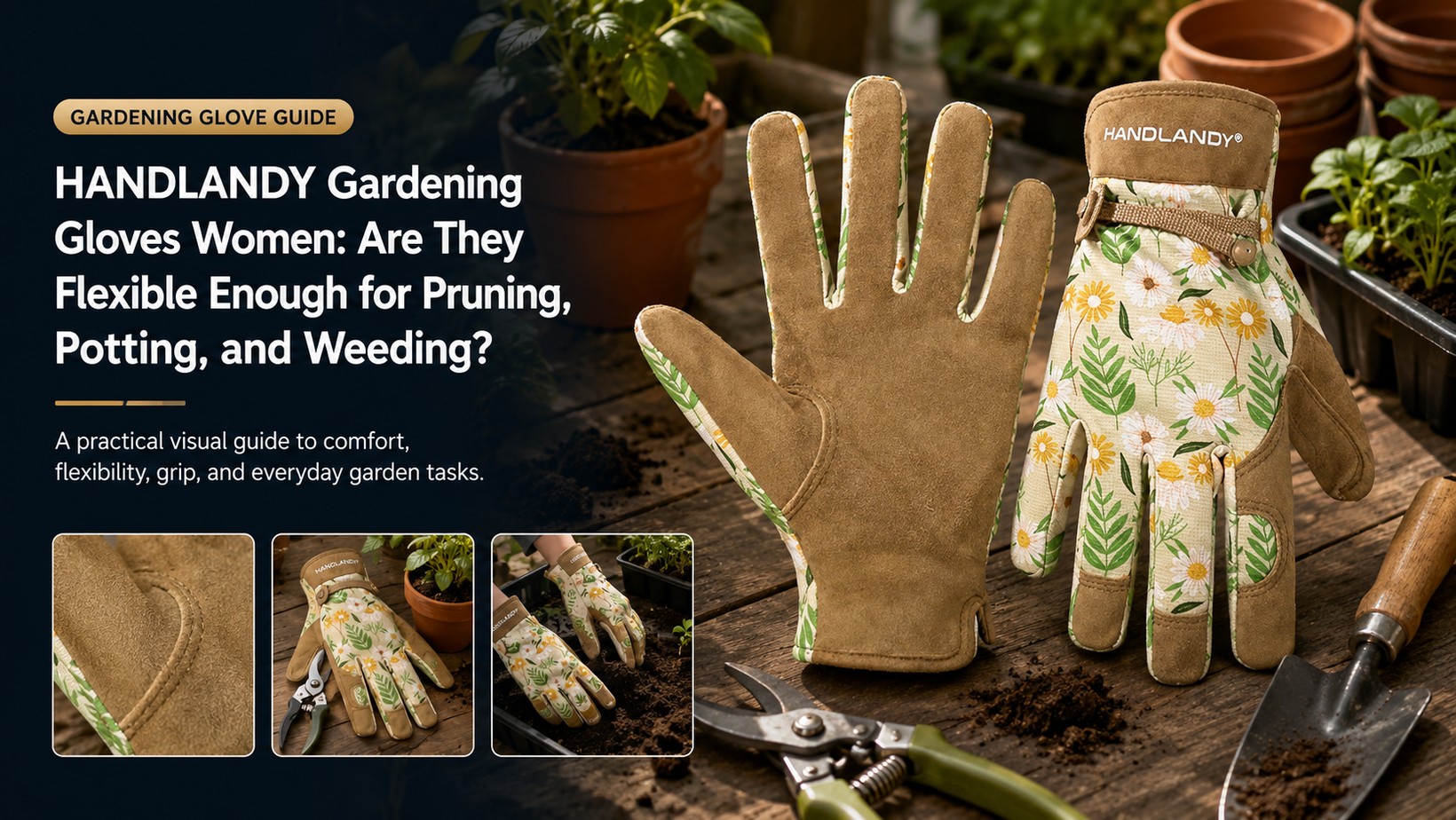
HANDLANDY Gardening Gloves Women is worth judging by the job it needs to do in a real garden, not by a single headline specification. For women gardeners who want one flexible pair for common yard work without giving up palm protection and pruning-tool control, the useful buying questions are storage, handling, materials, routine fit, and the limits that appear once the product is used around soil, water, plants, paths, or outdoor storage.
This guide focuses on the supplied product information and practical garden use. The product uses a genuine-leather palm, stretch-spandex back, adjustable wrist strap, and short slip-on cuff. That construction balances grip and flexibility for potting, weeding, carrying pots, and light pruning, but a short cuff exposes more wrist and forearm than a rose gauntlet and the glove should not be treated as cut-proof or puncture-proof protection. The goal is a realistic decision based on the work, not a marketing promise.
How to Evaluate HANDLANDY Gardening Gloves Women
The first step is to translate specifications into the work you actually do. A home gardener may use the same item very differently from a nursery, landscape crew, or large-property owner. Start with the product’s physical format, then consider the surface, plant size, storage, frequency of use, and whether the job is repeated enough for convenience to matter.
The supplied product record highlights these practical details: genuine leather palm; stretch spandex back for flexibility; adjustable wrist strap; short slip-on cuff; general pruning, potting, and weeding use. None of these details should be considered in isolation. Capacity can be less useful when access is tight, lightweight construction can be less important when the task needs leverage, and a rich growing medium can be the wrong choice for a plant that needs leaner or faster-draining conditions.
For women gardeners who want one flexible pair for common yard work without giving up palm protection and pruning-tool control, the best test is a normal working day. Imagine where the product starts, how it reaches the task, what must be carried or measured, where it will be cleaned, and where it will sit afterward. That sequence reveals whether the convenience is real.
Five Buying Checks That Matter
Storage and Space
When you compare flexible womens garden gloves, Flexibility is useful when you need to pinch seedlings, pull small weeds, tie supports, or feel the handle position of hand tools instead of working through a stiff bulky glove. This matters because a product that performs well only in ideal conditions can still create more work when storage, access, cleaning, or setup is ignored.
Handling and Control
When you compare grip for pruning shears, A leather palm can improve handle contact, but the glove must fit closely enough that loose fingertips do not fold between the pruner handles. This matters because a product that performs well only in ideal conditions can still create more work when storage, access, cleaning, or setup is ignored.
Task Match
When you compare gloves for potting soil work, For potting, look for enough finger movement to handle labels, small plants, and root balls while keeping abrasive mix away from the palm. This matters because a product that performs well only in ideal conditions can still create more work when storage, access, cleaning, or setup is ignored.
Routine Efficiency
When you compare breathable weeding handwear, A stretch back can improve ventilation, although the hands will still become warm during long sessions and wet gloves should be changed rather than worn for hours. This matters because a product that performs well only in ideal conditions can still create more work when storage, access, cleaning, or setup is ignored.
Long-Term Practicality
When you compare garden glove dexterity, Dexterity is part of safe tool control; a glove that is too large or stiff can make the user squeeze harder and reduce precision during repetitive work. This matters because a product that performs well only in ideal conditions can still create more work when storage, access, cleaning, or setup is ignored.
Where It Fits Best
A side-by-side task check is more useful than a generic “best for everyone” verdict. Use the table below to identify the situation closest to your own garden and then verify the product instructions before use.
| Situation | Practical Fit | What to Watch |
|---|---|---|
| Potting | Good fit | Leather protects palm from abrasive mix |
| Weeding | Good for routine weeds | Wet thorny weeds may need different protection |
| Light pruning | Good if grip is secure | Not blade or puncture proof |
| Roses and brambles | Limited cuff coverage | Choose gauntlet for forearms |
| Heavy wet work | Leather needs drying | Rotate pairs if frequently soaked |
The table is intentionally conservative. The most reliable decision comes from matching the product to normal work rather than chasing the maximum capacity, strongest claim, longest reach, or richest formula.
A Better Real-World Routine
Choose the size by finger length and palm fit, then test the gloves with your trowel and pruners before a long session. Keep the wrist strap snug without restricting movement, and change gloves if they become saturated or soil inside begins to rub the skin.
Before Each Use
- Check the product and working area for obvious damage or obstacles
- Confirm the task is within the listed size, capacity, or application limits
- Set up the route, container, plant, or work surface before starting
- Use controlled movements or measured amounts instead of forcing the task
- Pause when conditions change rather than continuing automatically
- Clean, drain, dry, or store the item according to its material and instructions
A repeatable routine makes comparison easier. Saving steps, improving control, or keeping a messy task organized without creating another problem are more meaningful advantages than a long list of secondary features.
Care, Storage, and Practical Limits
Brush off dry soil, follow the manufacturer cleaning method for leather, and let the gloves air-dry away from heaters. Inspect finger seams, palm wear, and wrist closures before pruning work.
For broader technique and manufacturer context, review garden ergonomics. Penn State Extension’s tool-fit guidance is relevant to glove dexterity because secure grip and neutral hand position reduce unnecessary effort. Always give the current product label or manufacturer instructions priority for rates, loads, assembly, cleaning, storage, and safety.
Who Should Choose It
These gloves fit mixed everyday tasks where flexibility and palm protection matter more than long-cuff thorn defense. Choose gauntlet-style gloves for dense roses or blackberries and waterproof gloves for prolonged wet soil or chemical handling.
A good purchase should reduce friction in the garden routine. If another product type solves the task with fewer compromises, choose that alternative instead of paying for features you will not use.
Final Buying Takeaway
HANDLANDY Gardening Gloves Women should be selected for task fit first and specifications second. The useful features are the ones that support the way you already garden without creating new storage, handling, maintenance, or application problems.
Treat the first few uses as a verification period: pay attention to control, cleanup, storage, comfort, and whether the result is consistent.
Frequently Asked Questions
Are these gloves good for pruning?
They can work for light pruning when the fit gives a secure grip, but they are not cut-proof and have a short cuff.
Do leather palms reduce dexterity?
They add protection, but the stretch back and correct size can preserve useful finger movement.
Are they suitable for roses?
For occasional rose contact they may help, but a long gauntlet is better when forearm thorn exposure is frequent.
Can they be worn for wet weeding?
Short wet jobs may be manageable, but saturated leather should be dried and a waterproof glove may be more comfortable for prolonged wet work.
How do I know the gloves are too large?
Loose fingertips, bunching in the palm, or difficulty controlling pruner handles are signs the fit may be too large.
