Yaheetech Potting Bench Wood is worth judging by the job it needs to do in a real garden, not by a single headline specification. For patio and deck gardeners comparing a wooden workstation for repotting, storage, and seasonal plant projects, the useful buying questions are storage, handling, materials, routine fit, and the limits that appear once the product is used around soil, water, plants, paths, or outdoor storage.
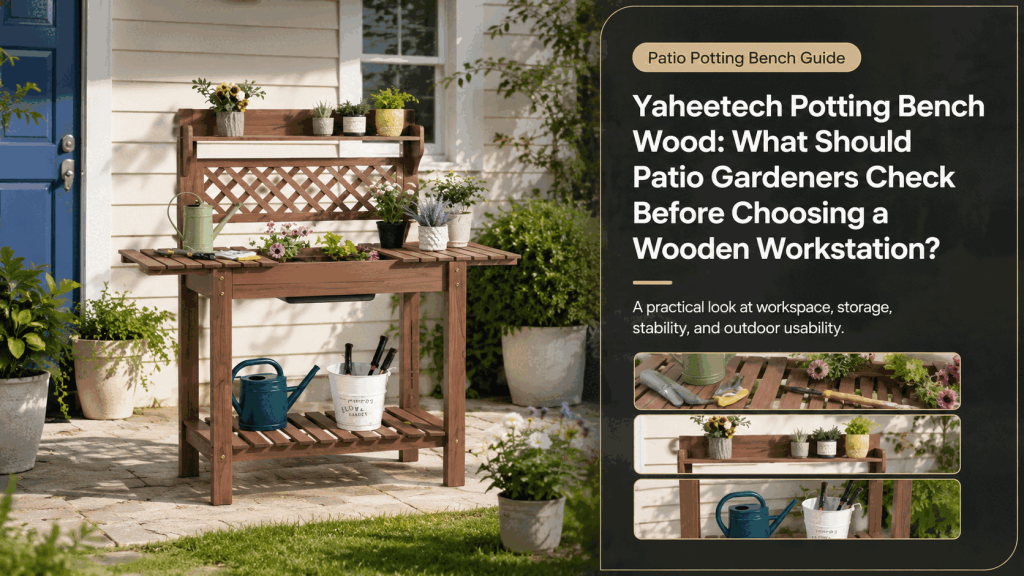
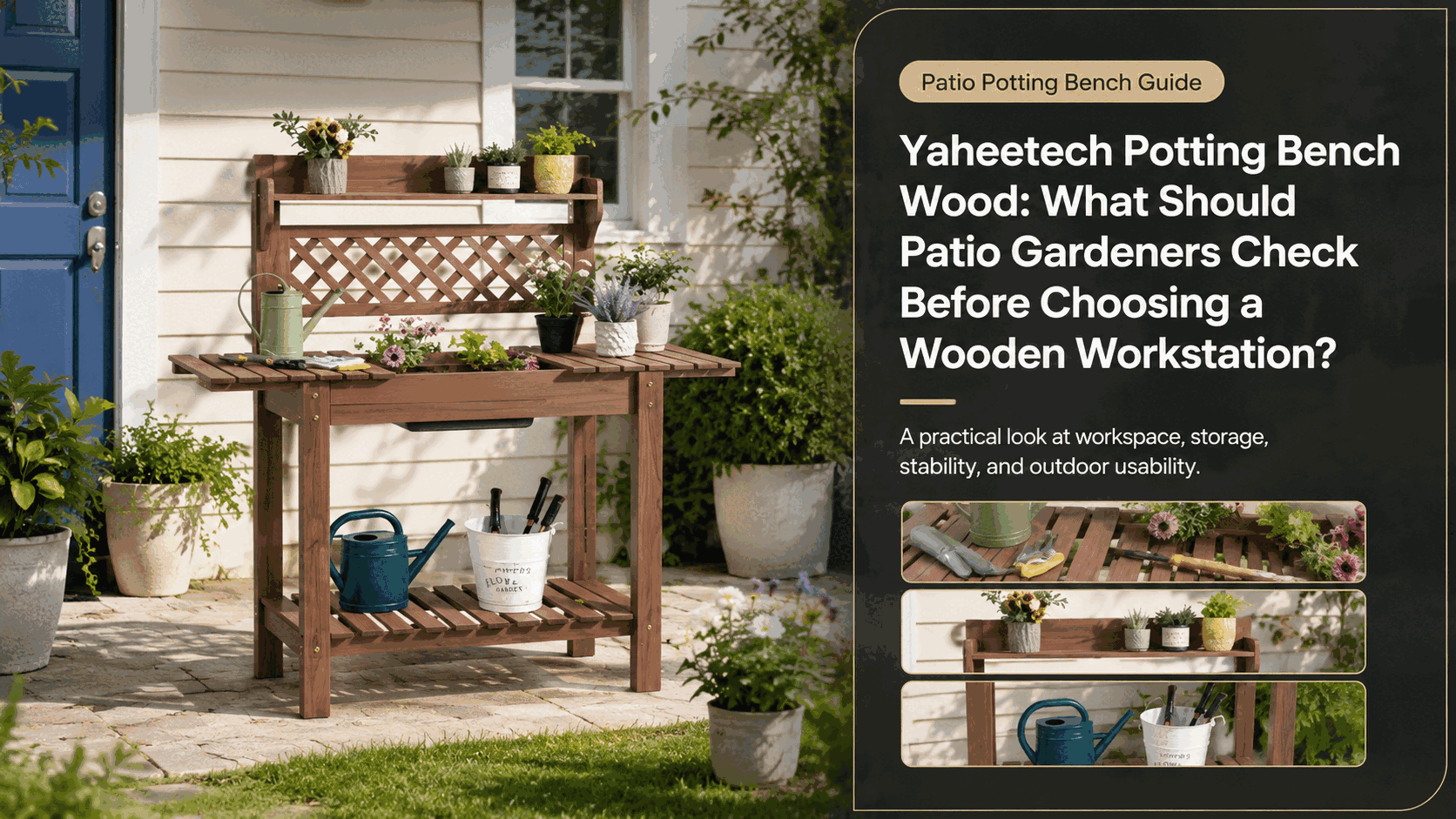
This guide focuses on the supplied product information and practical garden use. The product record describes a fir-wood workstation with a roughly 44.5-by-17-inch worktop, raised back and side edges, open shelves, a two-level cabinet, hooks, and a waist-high working surface. It offers useful organization in a relatively narrow footprint, but outdoor wood needs placement, drainage, finish, and fastener care to remain stable through weather cycles. The goal is a realistic decision based on the work, not a marketing promise.
How to Evaluate Yaheetech Potting Bench Wood
The first step is to translate specifications into the work you actually do. A home gardener may use the same item very differently from a nursery, landscape crew, or large-property owner. Start with the product’s physical format, then consider the surface, plant size, storage, frequency of use, and whether the job is repeated enough for convenience to matter.
The supplied product record highlights these practical details: fir-wood construction; approximately 44.5 x 17 inch worktop; raised back and side edges around the surface; open shelving plus two-level cabinet; hooks and waist-high work area. None of these details should be considered in isolation. Capacity can be less useful when access is tight, lightweight construction can be less important when the task needs leverage, and a rich growing medium can be the wrong choice for a plant that needs leaner or faster-draining conditions.
For patio and deck gardeners comparing a wooden workstation for repotting, storage, and seasonal plant projects, the best test is a normal working day. Imagine where the product starts, how it reaches the task, what must be carried or measured, where it will be cleaned, and where it will sit afterward. That sequence reveals whether the convenience is real.
Five Buying Checks That Matter
Storage and Space
When you compare wood potting bench durability, Durability depends on finish, end-grain exposure, fasteners, standing water, sun, and whether the bench can dry after rain rather than on wood species alone. This matters because a product that performs well only in ideal conditions can still create more work when storage, access, cleaning, or setup is ignored.
Handling and Control
When you compare patio planting workstation, Compare wooden and metal-topped benches by footprint, cleaning effort, storage, and whether the visual style fits the patio where the station will remain. This matters because a product that performs well only in ideal conditions can still create more work when storage, access, cleaning, or setup is ignored.
Task Match
When you compare outdoor bench weather care, Keep feet out of standing water, brush wet potting mix from the surface, and renew an appropriate exterior finish when the manufacturer recommends it. This matters because a product that performs well only in ideal conditions can still create more work when storage, access, cleaning, or setup is ignored.
Routine Efficiency
When you compare potting table shelf layout, Shelves are most useful when heavy bags stay low, frequently used tools sit near hand height, and fragile pots are not stored where they can be bumped during repotting. This matters because a product that performs well only in ideal conditions can still create more work when storage, access, cleaning, or setup is ignored.
Long-Term Practicality
When you compare wooden garden station setup, Level the bench before loading it, tighten hardware after initial use, and allow enough rear and side clearance for doors, hooks, shelves, and comfortable working movement. This matters because a product that performs well only in ideal conditions can still create more work when storage, access, cleaning, or setup is ignored.
Where It Fits Best
A side-by-side task check is more useful than a generic “best for everyone” verdict. Use the table below to identify the situation closest to your own garden and then verify the product instructions before use.
| Situation | Practical Fit | What to Watch |
|---|---|---|
| Covered patio | Strong use case | Still allow airflow and cleaning |
| Fully exposed deck | Needs more weather attention | Inspect finish and joints |
| Narrow wall space | 17-inch depth is useful | Allow standing clearance |
| Heavy soil storage | Use lower shelf or cabinet | Respect shelf limits |
| Frequent repotting | Raised edges help contain mix | Clean grit from surface |
The table is intentionally conservative. The most reliable decision comes from matching the product to normal work rather than chasing the maximum capacity, strongest claim, longest reach, or richest formula.
A Better Real-World Routine
Assemble on a level surface, square the frame before final tightening, and decide storage zones before filling shelves. Keep potting mix and heavy containers low, hand tools on hooks or a tray, and the central worktop clear enough to rotate a pot without knocking supplies.
Before Each Use
- Check the product and working area for obvious damage or obstacles
- Confirm the task is within the listed size, capacity, or application limits
- Set up the route, container, plant, or work surface before starting
- Use controlled movements or measured amounts instead of forcing the task
- Pause when conditions change rather than continuing automatically
- Clean, drain, dry, or store the item according to its material and instructions
A repeatable routine makes comparison easier. Saving steps, improving control, or keeping a messy task organized without creating another problem are more meaningful advantages than a long list of secondary features.
Care, Storage, and Practical Limits
Sweep dry soil after each session, wipe standing water, inspect wood finish and fasteners, and lift the bench away from persistent puddles. In harsh winter conditions, shelter or cover the unit only after it is dry.
For broader technique and manufacturer context, review Yaheetech workstation details. The manufacturer page is the best place to confirm current dimensions, materials, assembly details, and care instructions for the workstation. Always give the current product label or manufacturer instructions priority for rates, loads, assembly, cleaning, storage, and safety.
Who Should Choose It
The bench suits patio gardeners who want a narrow permanent work area with cabinet and shelf organization. Choose a stainless-topped bench when easiest cleanup is the main priority, or a folding table when the workspace must disappear between projects.
A good purchase should reduce friction in the garden routine. If another product type solves the task with fewer compromises, choose that alternative instead of paying for features you will not use.
Final Buying Takeaway
Yaheetech Potting Bench Wood should be selected for task fit first and specifications second. The useful features are the ones that support the way you already garden without creating new storage, handling, maintenance, or application problems.
Treat the first few uses as a verification period: pay attention to control, cleanup, storage, comfort, and whether the result is consistent.
Frequently Asked Questions
Can a wooden potting bench stay outdoors year-round?
It depends on climate, finish, placement, and manufacturer guidance. Standing water and repeated wet-dry cycles increase maintenance needs.
Is a 17-inch-deep worktop enough for repotting?
It can work for many small and medium pots, but large planters may need a deeper or temporary auxiliary surface.
Where should heavy soil bags be stored?
Keep heavy materials low and within the shelf or cabinet weight limits to improve stability.
Do raised edges make cleanup easier?
They can help contain loose mix, but the surface still needs sweeping so wet grit does not remain against the wood.
Should the bench be anchored?
Follow manufacturer guidance and assess wind, children, pets, surface level, and how top-heavy the stored items make the bench.
