
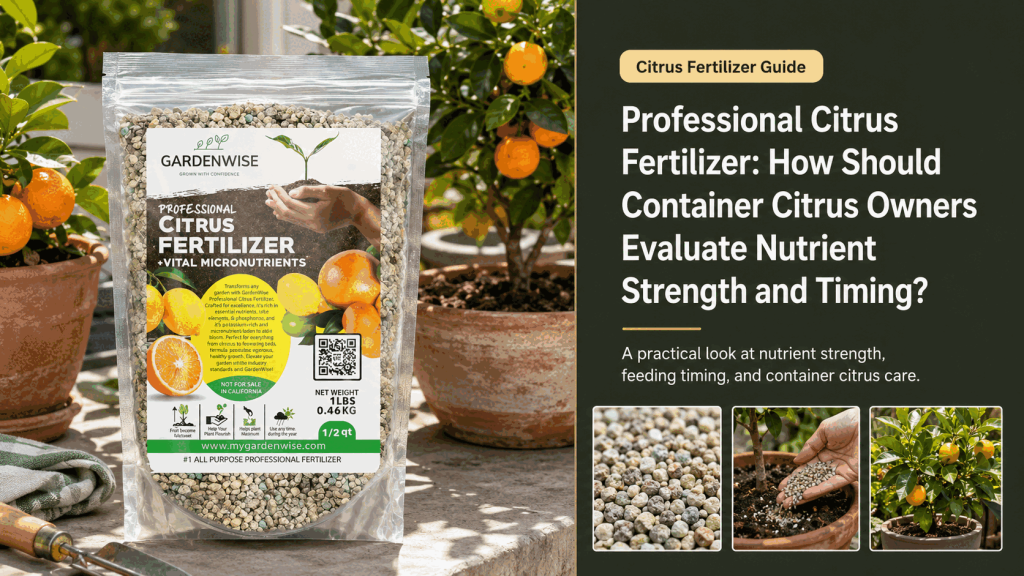
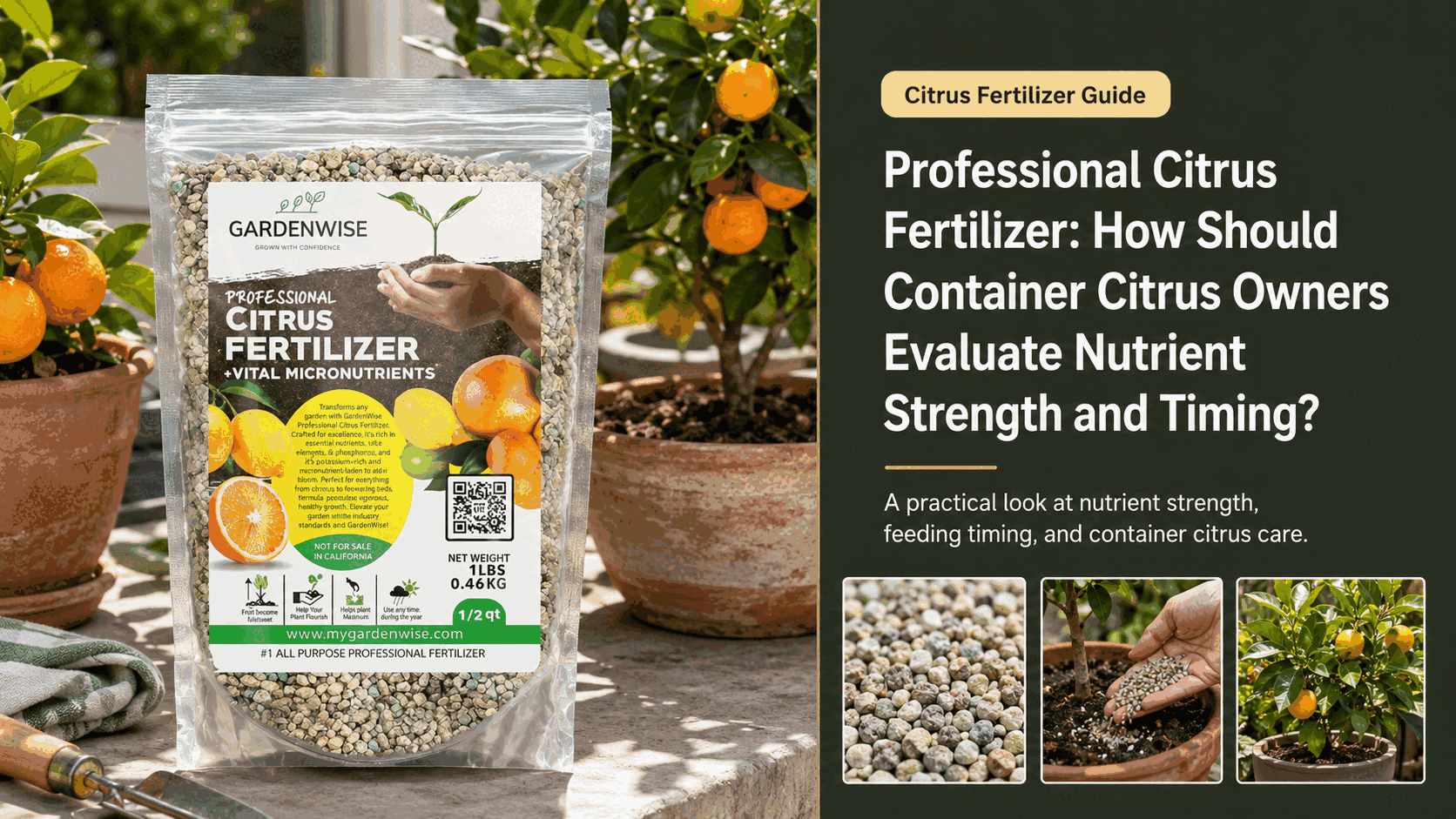
Professional Citrus Fertilizer is worth judging by the job it needs to do in a real garden, not by a single headline specification. For container citrus growers who want more control over nutrient strength without overfeeding a limited root zone, the useful buying questions are storage, handling, materials, routine fit, and the limits that appear once the product is used around soil, water, plants, paths, or outdoor storage.
This guide focuses on the supplied product information and practical garden use. The supplied GardenWise liquid formula lists a balanced 6-4-6 NPK analysis plus magnesium, zinc, copper, iron, and boron. Because container roots occupy a limited volume and irrigation can move nutrients quickly, the correct dose depends on the current label, pot size, growing conditions, recent feeding, and plant response. The product record describes use only a few times per year and suggests effects lasting up to about two months, so stronger or more frequent application is not automatically better. The goal is a realistic decision based on the work, not a marketing promise.
How to Evaluate Professional Citrus Fertilizer
The first step is to translate specifications into the work you actually do. A home gardener may use the same item very differently from a nursery, landscape crew, or large-property owner. Start with the product’s physical format, then consider the surface, plant size, storage, frequency of use, and whether the job is repeated enough for convenience to matter.
The supplied product record highlights these practical details: liquid citrus fertilizer; 6-4-6 NPK analysis; micronutrients including magnesium, zinc, copper, iron, and boron; intended for citrus and similar fruiting plants; product record suggests limited applications through the year rather than constant feeding. None of these details should be considered in isolation. Capacity can be less useful when access is tight, lightweight construction can be less important when the task needs leverage, and a rich growing medium can be the wrong choice for a plant that needs leaner or faster-draining conditions.
For container citrus growers who want more control over nutrient strength without overfeeding a limited root zone, the best test is a normal working day. Imagine where the product starts, how it reaches the task, what must be carried or measured, where it will be cleaned, and where it will sit afterward. That sequence reveals whether the convenience is real.
Five Buying Checks That Matter
Storage and Space
When you compare fertilizer strength for potted citrus, A concentrated liquid and an organic granular fertilizer use different dose systems, so compare them by label rate and nutrient delivery rather than by package size. This matters because a product that performs well only in ideal conditions can still create more work when storage, access, cleaning, or setup is ignored.
Handling and Control
When you compare nutrient ratio for lemon pots, NPK is only part of container nutrition. Micronutrients, potting mix, irrigation water, pH, root health, and light also affect how lemon leaves and fruit develop. This matters because a product that performs well only in ideal conditions can still create more work when storage, access, cleaning, or setup is ignored.
Task Match
When you compare citrus feeding frequency containers, Containers can accumulate salts or lose nutrients through drainage, so use the label interval and observe the plant instead of adding fertilizer every watering. This matters because a product that performs well only in ideal conditions can still create more work when storage, access, cleaning, or setup is ignored.
Routine Efficiency
When you compare professional plant food dosage, Measure liquid concentrate accurately and dilute exactly as directed; guessing a stronger mix increases the risk of root damage and salt stress. This matters because a product that performs well only in ideal conditions can still create more work when storage, access, cleaning, or setup is ignored.
Long-Term Practicality
When you compare lime tree fertilizer timing, Lime trees in containers respond to season, light, temperature, watering, and root space, so feeding should support active growth rather than force a stressed plant. This matters because a product that performs well only in ideal conditions can still create more work when storage, access, cleaning, or setup is ignored.
Where It Fits Best
A side-by-side task check is more useful than a generic “best for everyone” verdict. Use the table below to identify the situation closest to your own garden and then verify the product instructions before use.
| Situation | Practical Fit | What to Watch |
|---|---|---|
| Actively growing citrus | Follow label schedule | Measure concentrate precisely |
| Recently repotted plant | Check media and label | Fresh mix may contain fertilizer |
| Wilted dry plant | Correct water stress first | Do not fertilize severely dry roots |
| Slow winter growth | Often reduce feeding | Match light and growth rate |
| Salt crust on soil | Investigate buildup | Do not increase dosage |
The table is intentionally conservative. The most reliable decision comes from matching the product to normal work rather than chasing the maximum capacity, strongest claim, longest reach, or richest formula.
A Better Real-World Routine
Write the pot size, product rate, dilution volume, and date before mixing. Water or prepare the plant as the label directs, apply evenly, allow proper drainage, and record the response over the following weeks. Keep a separate measuring tool for fertilizer rather than using a kitchen utensil.
Before Each Use
- Check the product and working area for obvious damage or obstacles
- Confirm the task is within the listed size, capacity, or application limits
- Set up the route, container, plant, or work surface before starting
- Use controlled movements or measured amounts instead of forcing the task
- Pause when conditions change rather than continuing automatically
- Clean, drain, dry, or store the item according to its material and instructions
A repeatable routine makes comparison easier. Saving steps, improving control, or keeping a messy task organized without creating another problem are more meaningful advantages than a long list of secondary features.
Care, Storage, and Practical Limits
Store concentrate in the original labeled container, away from heat, children, pets, and food. Rinse measuring equipment after use, and never combine fertilizers unless the labels specifically permit it.
For broader technique and manufacturer context, review fertilizing container plants. University of Minnesota Extension explains how container size, irrigation, and soluble nutrients interact, which is useful context for measured citrus feeding. Always give the current product label or manufacturer instructions priority for rates, loads, assembly, cleaning, storage, and safety.
Who Should Choose It
This liquid formula suits container citrus owners who want a measured nutrient program and are comfortable mixing doses. Granular products may be easier for gardeners who prefer fewer measuring steps and slower incorporation into the potting surface.
A good purchase should reduce friction in the garden routine. If another product type solves the task with fewer compromises, choose that alternative instead of paying for features you will not use.
Final Buying Takeaway
Professional Citrus Fertilizer should be selected for task fit first and specifications second. The useful features are the ones that support the way you already garden without creating new storage, handling, maintenance, or application problems.
Treat the first few uses as a verification period: pay attention to control, cleanup, storage, comfort, and whether the result is consistent.
Frequently Asked Questions
Is 6-4-6 too strong for potted citrus?
The ratio alone does not determine strength. Follow the product dilution and rate for the plant and container size.
How often should container citrus be fertilized?
Use the fertilizer label and adjust for active growth, season, pot size, watering, and the existing nutrient charge in the potting mix.
Can I double the dose for yellow leaves?
No. Yellowing has multiple causes, and excess fertilizer can worsen root stress.
Do micronutrients matter for citrus?
They can matter, but deficiencies should not be diagnosed from one symptom alone. Growing conditions and root health also need review.
Can liquid citrus fertilizer be mixed with another fertilizer?
Do not combine products unless both labels and appropriate horticultural guidance support the combination.
