
Collapsible Beach Wagon Brakes is worth judging by the job it needs to do in a real garden, not by a single headline specification. For gardeners moving soil, pots, tools, or nursery purchases across sloped yards, driveways, and mixed outdoor surfaces, the useful buying questions are storage, handling, materials, routine fit, and the limits that appear once the product is used around soil, water, plants, paths, or outdoor storage.
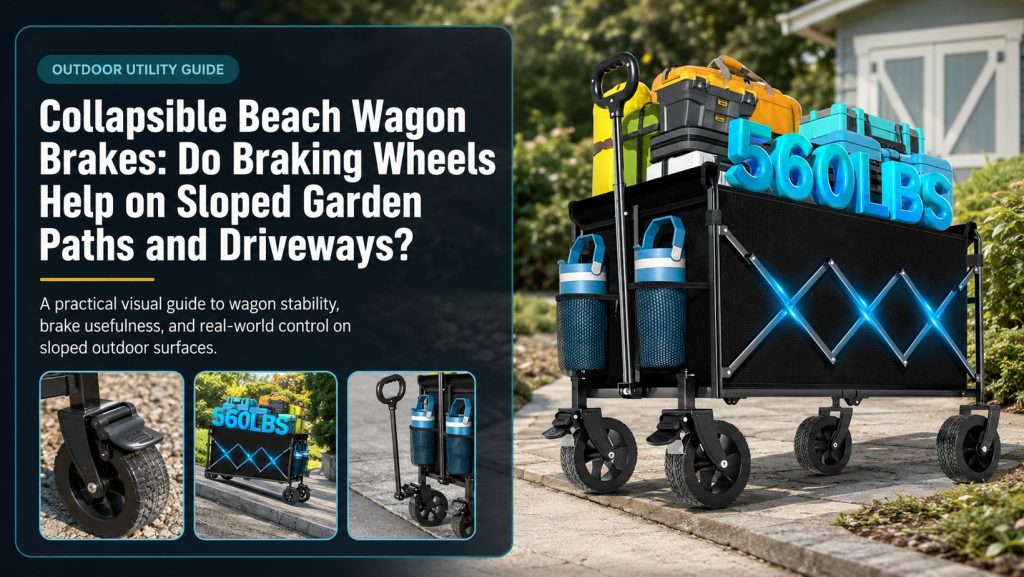
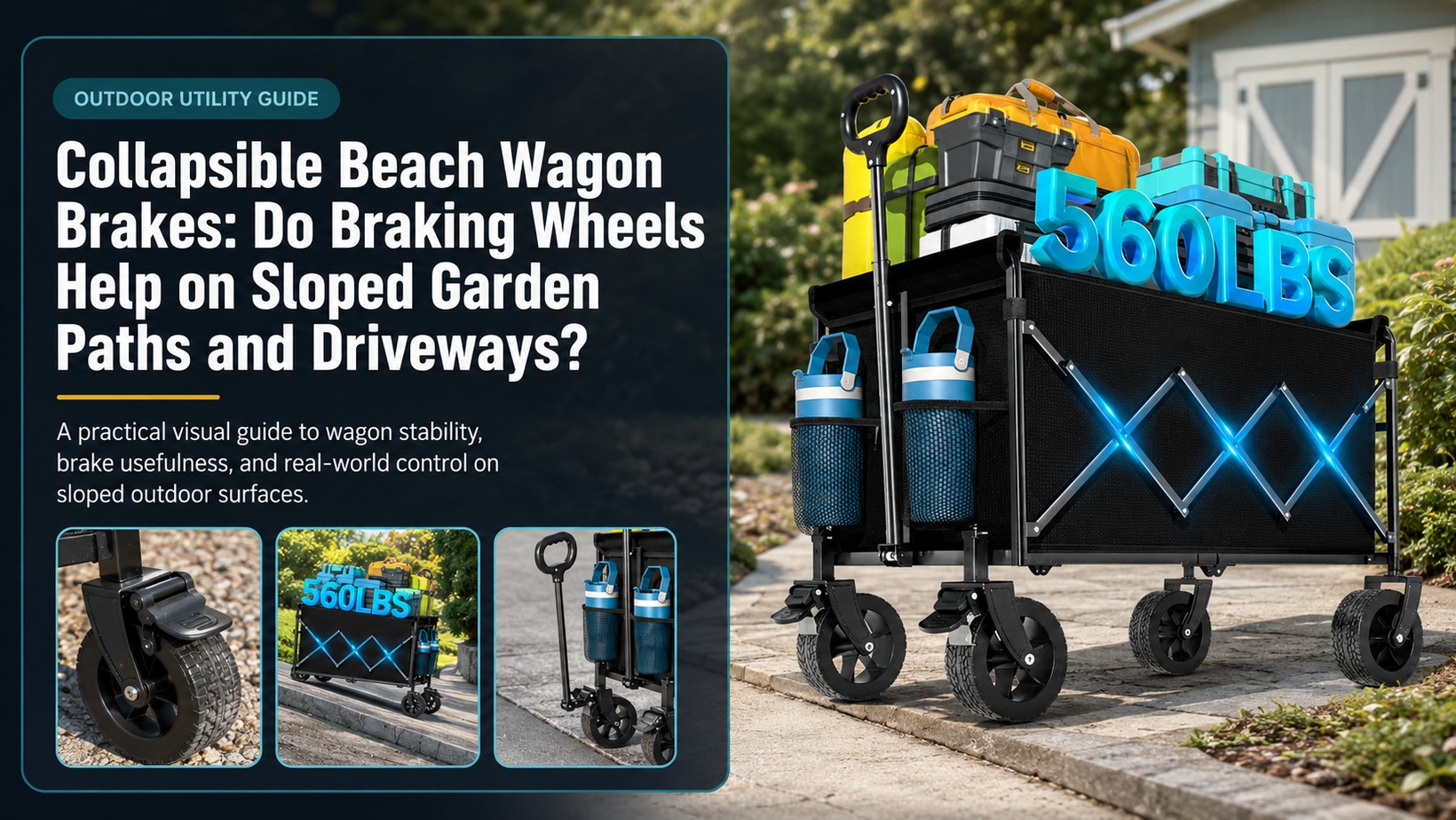
This guide focuses on the supplied product information and practical garden use. The wagon record lists 7-by-4-inch all-terrain wheels, integrated brakes, 360-degree front wheels, a heavy-duty steel structure, 600D Oxford fabric, telescoping handle, side storage, folding design, and a stated load capacity up to 560 pounds. Brakes are useful for parking and loading, but they do not turn a wagon into a controlled downhill transport device; slope, surface, load distribution, and the user’s ability to restrain the cart remain critical. The goal is a realistic decision based on the work, not a marketing promise.
How to Evaluate Collapsible Beach Wagon Brakes
The first step is to translate specifications into the work you actually do. A home gardener may use the same item very differently from a nursery, landscape crew, or large-property owner. Start with the product’s physical format, then consider the surface, plant size, storage, frequency of use, and whether the job is repeated enough for convenience to matter.
The supplied product record highlights these practical details: 7 x 4 inch all-terrain wheels; integrated wheel brakes; 360-degree front-wheel steering; steel frame with 600D Oxford cargo area; folding storage design with listed capacity up to 560 pounds. None of these details should be considered in isolation. Capacity can be less useful when access is tight, lightweight construction can be less important when the task needs leverage, and a rich growing medium can be the wrong choice for a plant that needs leaner or faster-draining conditions.
For gardeners moving soil, pots, tools, or nursery purchases across sloped yards, driveways, and mixed outdoor surfaces, the best test is a normal working day. Imagine where the product starts, how it reaches the task, what must be carried or measured, where it will be cleaned, and where it will sit afterward. That sequence reveals whether the convenience is real.
Five Buying Checks That Matter
Storage and Space
When you compare wagon brakes for sloped yards, A brake is most valuable when the wagon is stationary for loading, unloading, or a short pause; do not rely on it to control a heavily loaded cart moving downhill. This matters because a product that performs well only in ideal conditions can still create more work when storage, access, cleaning, or setup is ignored.
Handling and Control
When you compare locking wheels garden cart, Check which wheels lock and whether the control is easy to reach while you still have physical control of the handle and load. This matters because a product that performs well only in ideal conditions can still create more work when storage, access, cleaning, or setup is ignored.
Task Match
When you compare folding wagon hill control, On a hill, reduce load weight, keep the cart below your center of control where practical, use a gradual route, and avoid cross-slope turns that shift the cargo sideways. This matters because a product that performs well only in ideal conditions can still create more work when storage, access, cleaning, or setup is ignored.
Routine Efficiency
When you compare cart stability on driveways, Concrete offers low rolling resistance, so a heavy wagon can gain speed quickly; rough joints, drain channels, and curb transitions can also upset a tall load. This matters because a product that performs well only in ideal conditions can still create more work when storage, access, cleaning, or setup is ignored.
Long-Term Practicality
When you compare brake wheels for outdoor hauling, Wheel brakes are one part of the system. Tire width, swivel behavior, handle geometry, frame rigidity, and load height all influence outdoor control. This matters because a product that performs well only in ideal conditions can still create more work when storage, access, cleaning, or setup is ignored.
Where It Fits Best
A side-by-side task check is more useful than a generic “best for everyone” verdict. Use the table below to identify the situation closest to your own garden and then verify the product instructions before use.
| Situation | Practical Fit | What to Watch |
|---|---|---|
| Flat driveway | Brakes useful for parking | Engage before loading |
| Mild slope | Helpful but not sufficient | Reduce load and maintain handle control |
| Steep slope | High risk | Choose another route or method |
| Loose gravel | Wide wheels may help | Expect rolling resistance and steering changes |
| Tall potted plants | Center of gravity rises | Secure and space pots low |
The table is intentionally conservative. The most reliable decision comes from matching the product to normal work rather than chasing the maximum capacity, strongest claim, longest reach, or richest formula.
A Better Real-World Routine
Test the empty wagon on the route first, then add a moderate load and learn how quickly it rolls and steers. Keep dense items low, use the brakes before hands leave the handle, and avoid placing a loaded cart where a brake release could allow it to roll toward people, vehicles, or traffic.
Before Each Use
- Check the product and working area for obvious damage or obstacles
- Confirm the task is within the listed size, capacity, or application limits
- Set up the route, container, plant, or work surface before starting
- Use controlled movements or measured amounts instead of forcing the task
- Pause when conditions change rather than continuing automatically
- Clean, drain, dry, or store the item according to its material and instructions
A repeatable routine makes comparison easier. Saving steps, improving control, or keeping a messy task organized without creating another problem are more meaningful advantages than a long list of secondary features.
Care, Storage, and Practical Limits
Remove grit from brake and wheel areas, confirm that locks engage and release fully, and inspect tires, axles, handle joints, and frame before slope work. Let fabric dry before folding and do not store a loaded wagon on its brake.
For broader technique and manufacturer context, review garden task strain reduction. Penn State Extension discusses adapting garden tasks and equipment to reduce physical strain, which supports using carts carefully for hauling rather than carrying everything by hand. Always give the current product label or manufacturer instructions priority for rates, loads, assembly, cleaning, storage, and safety.
Who Should Choose It
A braking folding wagon suits gardeners who need a portable cargo carrier and often pause on patios, driveways, or gentle slopes. For steep ground, loose construction terrain, or consistently dense loads, a purpose-built garden cart with a more appropriate braking and wheel system may be safer.
A good purchase should reduce friction in the garden routine. If another product type solves the task with fewer compromises, choose that alternative instead of paying for features you will not use.
Final Buying Takeaway
Collapsible Beach Wagon Brakes should be selected for task fit first and specifications second. The useful features are the ones that support the way you already garden without creating new storage, handling, maintenance, or application problems.
Treat the first few uses as a verification period: pay attention to control, cleanup, storage, comfort, and whether the result is consistent.
Frequently Asked Questions
Do wheel brakes make a wagon safe on a steep hill?
No. Brakes help when stationary, but slope angle, load, traction, and human control still determine safety.
Should the wagon be loaded to its maximum rating on a slope?
No. A maximum structural rating is not a recommended operating load for every surface or grade.
Do large wheels help on gravel?
They can improve obstacle clearance, but loose gravel changes traction and steering and may still be difficult with heavy loads.
When should the brakes be engaged?
Engage them before loading, unloading, or leaving the wagon stationary, following the product instructions.
Can the wagon be stored while loaded?
It is better to unload it before folding or long storage and not rely on the brakes to hold stored weight.
