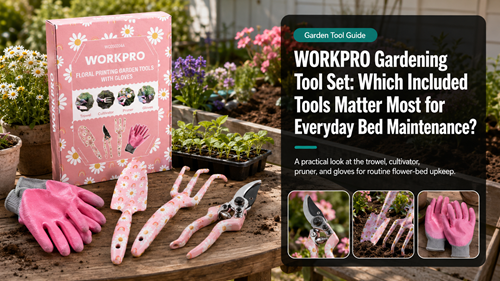
WORKPRO Gardening Tool Set is worth judging by the job it needs to do in a real garden, not by a single headline specification. For backyard gardeners building a small practical hand-tool collection instead of buying a large kit full of rarely used pieces, the useful buying questions are storage, handling, materials, routine fit, and the limits that appear once the product is used around soil, water, plants, paths, or outdoor storage.
This guide focuses on the supplied product information and practical garden use. The supplied WORKPRO set contains four core pieces: a trowel, hand rake, pruner, and gloves. The hand tools use aluminum-alloy working parts, the pruner uses carbon steel, and the gloves have a nitrile-coated working surface. That is a focused kit for transplanting, surface cultivation, light pruning, and routine hand protection rather than a complete set for digging, watering, edging, or heavy branch cutting. The goal is a realistic decision based on the work, not a marketing promise.
How to Evaluate WORKPRO Gardening Tool Set
The first step is to translate specifications into the work you actually do. A home gardener may use the same item very differently from a nursery, landscape crew, or large-property owner. Start with the product’s physical format, then consider the surface, plant size, storage, frequency of use, and whether the job is repeated enough for convenience to matter.
The supplied product record highlights these practical details: four-piece set with trowel, hand rake, pruner, and gloves; aluminum-alloy hand tools; carbon-steel pruning blade; nitrile-coated gloves; pruner record indicates roughly 0.4-inch cutting capacity. None of these details should be considered in isolation. Capacity can be less useful when access is tight, lightweight construction can be less important when the task needs leverage, and a rich growing medium can be the wrong choice for a plant that needs leaner or faster-draining conditions.
For backyard gardeners building a small practical hand-tool collection instead of buying a large kit full of rarely used pieces, the best test is a normal working day. Imagine where the product starts, how it reaches the task, what must be carried or measured, where it will be cleaned, and where it will sit afterward. That sequence reveals whether the convenience is real.
Five Buying Checks That Matter
Storage and Space
When you compare hand tool kit for flower beds, A compact flower-bed kit is useful when each piece has a recurring role: planting, loosening surface soil, trimming small stems, and protecting hands. This matters because a product that performs well only in ideal conditions can still create more work when storage, access, cleaning, or setup is ignored.
Handling and Control
When you compare garden set tool usefulness, Tool count matters less than task coverage; compare what you actually do every week with what the set includes and identify missing essentials separately. This matters because a product that performs well only in ideal conditions can still create more work when storage, access, cleaning, or setup is ignored.
Task Match
When you compare trowel cultivator pruning kit, When comparing kits, check blade quality, handle comfort, joint strength, and whether the pruning tool is sized for the stems you expect to cut. This matters because a product that performs well only in ideal conditions can still create more work when storage, access, cleaning, or setup is ignored.
Routine Efficiency
When you compare everyday garden maintenance tools, Routine bed maintenance usually needs a small number of dependable tools more often than specialized attachments, so easy cleaning and storage deserve weight in the decision. This matters because a product that performs well only in ideal conditions can still create more work when storage, access, cleaning, or setup is ignored.
Long-Term Practicality
When you compare backyard tool set comparison, Compare sets by task, comfort, durability, and replacement availability instead of assuming a larger piece count creates better value. This matters because a product that performs well only in ideal conditions can still create more work when storage, access, cleaning, or setup is ignored.
Where It Fits Best
A side-by-side task check is more useful than a generic “best for everyone” verdict. Use the table below to identify the situation closest to your own garden and then verify the product instructions before use.
| Situation | Practical Fit | What to Watch |
|---|---|---|
| Transplanting annuals | Trowel | High-use core task |
| Surface loosening | Hand rake | Useful around established plants |
| Small live stems | Pruner | Stay within stated capacity |
| Thorny or dirty soil work | Gloves | Match glove protection to hazard |
| Deep digging | Not included | Add spade or fork separately |
The table is intentionally conservative. The most reliable decision comes from matching the product to normal work rather than chasing the maximum capacity, strongest claim, longest reach, or richest formula.
A Better Real-World Routine
Keep the set near the bed rather than scattered around the yard. Use the rake to loosen crusted surface soil, the trowel for transplanting and measured amendments, and the pruner only on stems within its intended capacity. Wipe tools before switching from diseased to healthy plants.
Before Each Use
- Check the product and working area for obvious damage or obstacles
- Confirm the task is within the listed size, capacity, or application limits
- Set up the route, container, plant, or work surface before starting
- Use controlled movements or measured amounts instead of forcing the task
- Pause when conditions change rather than continuing automatically
- Clean, drain, dry, or store the item according to its material and instructions
A repeatable routine makes comparison easier. Saving steps, improving control, or keeping a messy task organized without creating another problem are more meaningful advantages than a long list of secondary features.
Care, Storage, and Practical Limits
Clean soil from the trowel and rake, wipe plant sap from the pruning blade, dry metal before storage, and inspect the pruner pivot for smooth movement. Replace gloves when the coating tears or grip becomes unreliable.
For broader technique and manufacturer context, review choosing basic garden tools. Penn State Extension outlines basic garden tools and reinforces matching the tool set to the jobs the gardener actually performs. Always give the current product label or manufacturer instructions priority for rates, loads, assembly, cleaning, storage, and safety.
Who Should Choose It
This WORKPRO kit suits flower beds, raised beds, containers, and light backyard maintenance. Gardeners who cut woody shrubs, dig compacted ground, or maintain large vegetable plots will still need full-size and task-specific tools.
A good purchase should reduce friction in the garden routine. If another product type solves the task with fewer compromises, choose that alternative instead of paying for features you will not use.
Final Buying Takeaway
WORKPRO Gardening Tool Set should be selected for task fit first and specifications second. The useful features are the ones that support the way you already garden without creating new storage, handling, maintenance, or application problems.
Treat the first few uses as a verification period: pay attention to control, cleanup, storage, comfort, and whether the result is consistent.
Frequently Asked Questions
Is a four-piece garden set enough for a beginner?
It covers several common hand-level tasks, but watering, deep digging, edging, and heavier pruning require additional tools.
What is the pruner best used for?
Use it for small live stems within the manufacturer cutting capacity rather than forcing thick woody branches.
Are aluminum hand tools suitable for soil work?
They are practical for normal hand-tool tasks, but avoid using a trowel as a pry bar against rocks or roots.
How do I prevent spreading plant disease with pruners?
Clean and disinfect the blade appropriately between infected and healthy plants, following horticultural guidance.
Should I choose a larger tool kit instead?
Only when the added tools match real tasks. More pieces can add storage clutter if they duplicate tools you already own.
