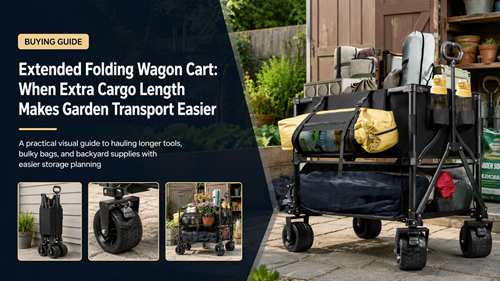
An extended folding wagon cart adds cargo length for nursery trays, long-handled tools, bags, branches, and bulky supplies that do not sit comfortably in a standard short bed. The extra space can reduce trips, but it also increases turning radius, storage length, and the chance of overloading the frame simply because more items fit.
Gardeners should decide whether the problem is truly cargo length. If the usual load is only heavy and compact, a stronger standard wagon may be easier to maneuver. Extended beds earn their value when long or awkward items are a repeated part of the routine.
How an Extended Folding Wagon Cart Changes the Load
A longer bed spreads objects over more distance and can reduce awkward stacking. Nursery flats can stay level, long bags can lie flat, and handles can remain inside the footprint instead of protruding over the rear.
Length also increases leverage. Heavy items placed far from the axle center can change steering effort and frame loading. Keep dense materials near the middle even when the bed allows them to sit at an end.
Before buying, map the turning area around gates, parked vehicles, shed corners, and raised beds. A cart that is excellent in an open lawn can be frustrating in a narrow side yard.
Six Long-Cargo Questions to Answer
Measure the Longest Regular Load
A long cargo folding wagon is most useful when the usable bed length closely matches items you transport every week.
Measure nursery trays, tool handles, bagged amendments, or folding chairs rather than relying on an estimate.
Carry Tall Garden Supplies Safely
A wagon for tall garden supplies should allow long items to lie low or be secured so they do not act like levers during turns.
Do not rest sharp tool heads against unsupported fabric sides.
Compare Extended Capacity
extended utility cart capacity should be evaluated by both total weight and where that weight sits in the longer frame.
More volume can tempt users to exceed the safe load even when each individual item feels light.
Keep Long Tools Controlled
A foldable cart for long tools should keep rake, shovel, or hoe handles from dragging on the ground or swinging outside the cart on corners.
Use straps or internal dividers when the design provides secure attachment points.
Use Length for Bulky Loads
A garden wagon for bulky loads can reduce stacking for branches, empty planters, and nursery flats.
Bulky light loads still need to remain below the side height where they can obstruct visibility.
Plan Where the Long Cart Will Live
large cargo wagon storage matters because extended frames may fold narrow but remain tall or long in one dimension.
Measure the folded package and verify whether extensions or shelves must be removed for storage.
When Extra Length Helps and When It Hurts
Longer cargo space solves specific problems but creates new constraints.
| Situation | Extended Cart Benefit | Trade-Off |
|---|---|---|
| Nursery flats | More level support | Longer turn radius |
| Rakes and shovels | Keeps handles inside bed | Needs secure tie-down |
| Mulch bags | Fewer stacked bags | Easy to overload |
| Branches | Less overhang | Can obstruct visibility |
| Open property | Efficient long trips | More empty cart weight |
| Tight side yard | Limited benefit | Harder to turn |
Load Long Items Before Heavy Items
Place the longest item first so you can see how much supported bed length remains. Add dense bags near the center and keep fragile nursery trays above or beside them rather than under weight.
Walk a short test route and watch both ends of the cart on turns. Extended beds can clip obstacles that the handle clears.
Long-Cargo Loading Routine
- Measure the item before loading
- Inspect extension locks
- Place long items low
- Center dense weight
- Secure loose handles
- Keep visibility clear
- Test the widest turn
- Unload before folding
Do not use the extra length as a reason to exceed the listed load capacity. Volume and weight are separate constraints.
Inspect Extension and Folding Hardware
Extended carts may use hinges, telescoping sections, tailgates, or lower shelves. Clean grit from those mechanisms and confirm every lock is fully engaged before loading.
Dry fabric and store removable accessories with the cart so the full configuration is available when needed.
For an example of manufacturer guidance on distributed loads, maximum capacity, tire pressure, and inspection, review this Gorilla Carts owner manual.
Who Should Choose Extra Cargo Length
Extended wagons suit larger properties, nursery shoppers, community gardens, and gardeners who repeatedly move long tools, trays, branches, or oversized bags.
A standard cart is usually better for tight yards where most loads are compact. Extra length should solve a recurring transport problem rather than simply provide unused capacity.
Choose an Extended Folding Wagon Cart for Long, Awkward Loads
An extended folding wagon cart is valuable when normal cargo does not fit safely inside a standard bed. Usable length, weight distribution, turning room, tie-down options, and folded storage should all be checked together.
Buy the extra length for a clear recurring task, then load it low and centered so the added space improves transport without reducing control.
Frequently Asked Questions
How much longer should an extended wagon be?
It should support the longest regular items without adding more turning and storage length than the property can handle.
Can long tools simply stick out of a standard cart?
Short overhang may be manageable, but unsecured handles can swing, drag, or strike obstacles. Supported storage is safer.
Does a longer wagon carry more weight?
Not necessarily. Bed length and rated weight are separate specifications.
Are extended wagons harder to fold?
Some are just as simple, while others use extensions or shelves. Check the actual folding sequence.
Who benefits most from an extended bed?
Gardeners moving nursery trays, long tools, branches, or other bulky items on larger properties.
