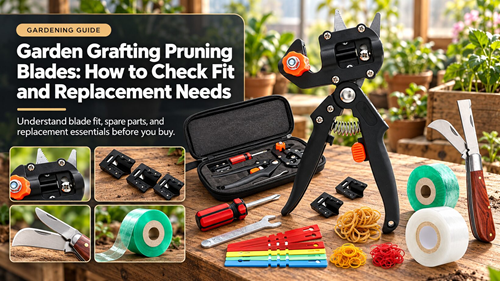

Garden Grafting Pruning Blades are replacement parts, so compatibility matters more than appearance. Two blades can look nearly identical while differing in mounting-hole position, thickness, cutting profile, or the mechanism they fit. Ordering from a photo alone can leave you with a blade that cannot be installed safely.
The replacement decision also depends on condition. A dull blade may need sharpening when the manufacturer allows it, while a chipped, bent, corroded, or loose blade may need replacement. This guide keeps fit, wear, and safe handling separate.
How to Evaluate Garden Grafting Pruning Blades
Record the tool brand, model number, and current blade shape before shopping. Photograph the blade and mounting area if the part number is not printed.
Measure only when the manufacturer allows dimension-based matching; a small difference in hole spacing or profile can affect alignment and cut quality.
Inspect the tool mechanism at the same time. Replacing the blade will not correct a loose pivot, worn spring, damaged anvil, or misaligned frame.
Garden Grafting Pruning Blades decisions are easiest to defend when the product is tested against the exact space, material, plant, or route described above rather than a generic maximum claim.
Six Buying Checks That Matter
Start with the Exact Part
When comparing grafting tool blades, Use the current product page and compatibility notes to identify which blade profiles fit the tool.
Do not assume every grafting shear uses the same V, omega, or U-shaped blade dimensions.
Plan Replacement Before Failure
When comparing replacement pruning blades, Keep a compatible spare when the tool is used during a short grafting season so a damaged edge does not stop the work.
Store replacement blades dry and protected from contact with other metal parts that can nick the cutting edge.
Verify Compatibility
When comparing pruning blade compatibility, Compatibility includes mounting geometry and the way the blade moves through the tool, not just overall length.
If the manufacturer does not list your tool model, confirm before ordering instead of drilling or grinding the blade to fit.
Match the Replacement Part
When comparing grafting tool replacement blade, Compare the replacement with the original blade side by side before installation. Check hole position, profile, thickness, and edge orientation.
Use the specified fasteners and torque method because loose or overtightened hardware can affect alignment.
Check the Blade Size
When comparing garden grafting blade size, Blade size should be evaluated together with the tool’s stated stem-capacity range. A replacement does not increase the safe cutting capacity of the tool.
Use straight, healthy plant material within the tool limits rather than forcing oversized stems through a sharp new blade.
Replace Worn Cutting Parts
When comparing pruning tool blade replacement, Replace a blade when damage, corrosion, or edge wear prevents a clean controlled cut and the part is designed to be replaceable.
Clean sap and debris after use so you can distinguish normal residue from actual edge damage during inspection.
Where It Fits Best
A side-by-side task check is more useful than a generic “best for everyone” verdict. Use the table below to match the product to normal work and then verify the current product instructions before use.
| Situation | Practical Fit | What to Watch |
|---|---|---|
| Exact model match | Highest priority | Prevents misalignment |
| Blade profile | Must match tool | Controls graft shape |
| Mounting holes | Exact location | Safe installation |
| Blade thickness | Specified part | Mechanism clearance |
| Edge condition | Sharp and undamaged | Clean cutting |
| Spare storage | Dry protected case | Prevents corrosion |
The table is intentionally conservative. The most reliable decision comes from matching the product to normal work rather than chasing the maximum capacity, longest reach, highest piece count, or strongest claim.
A Better Real-World Routine
Set up the work area before the first full task. Confirm the route, container, plant, soil condition, or material involved and use a light test first so fit and control can be checked without committing to the hardest job.
Keep a simple record of what worked: tool size, load, application amount, storage position, or setup. Repeatable decisions make future purchases and maintenance easier.
Before Each Use
- Record tool model
- Photograph original blade
- Check blade profile
- Compare mounting holes
- Confirm thickness
- Inspect pivot and anvil
- Use correct fasteners
- Store spare blades safely
A repeatable routine makes comparison easier. Saving steps, improving control, or keeping a messy task organized without creating another problem are more meaningful advantages than a long list of secondary features.
Care, Storage, and Practical Limits
Clean plant sap from blades after use, dry the tool before storage, and follow the manufacturer instructions for sharpening, lubrication, disassembly, and replacement.
For broader technique and safety context, review University of Minnesota Extension guidance on pruning timing and grafted fruit trees. Always give the current product label, manual, or manufacturer instructions priority for rates, loads, assembly, cleaning, storage, and replacement parts.
Who Should Choose It
Replacement blades are appropriate for gardeners who already own a compatible grafting tool and want to maintain clean cuts without replacing the entire tool.
A good purchase should reduce friction in the garden routine. If another product type solves the task with fewer compromises, choose that alternative instead of paying for features you will not use.
Final Buying Takeaway
Garden Grafting Pruning Blades are a precision replacement part. Confirm the exact tool and mounting geometry first, then replace worn blades before damage compromises alignment or cut quality.
Garden Grafting Pruning Blades should be treated as a practical tool or product choice: verify current specifications, use the first few sessions as a test period, and keep the setup that remains controlled, easy to maintain, and consistent.
Frequently Asked Questions
Can any grafting blade fit any tool?
No. Blade profile, thickness, and mounting geometry vary by tool and model.
Should a dull blade be sharpened or replaced?
Follow the manufacturer guidance. Some blades can be sharpened; damaged or incompatible parts should be replaced.
Can I drill a new hole to make a blade fit?
Do not modify a blade to force compatibility. Use the correct replacement part.
When should I keep a spare blade?
A spare is useful when grafting work is time-sensitive and the exact compatible part may not be locally available.
Does a new blade increase cutting capacity?
No. The tool frame and mechanism still determine the safe stem-size range.
