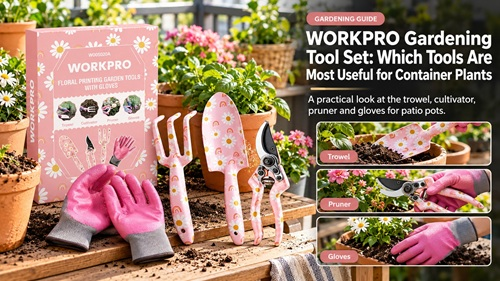

A WORKPRO Gardening Tool Set can cover many container-plant jobs, but pots and balcony gardens reward precision more than raw digging power. The most useful pieces are usually the ones that fit between the pot rim and plant, move small amounts of soil, loosen roots gently, and trim light stems without crowding the workspace.
Before buying a full set, compare the tool lengths and head sizes with your typical containers. A large trowel can be efficient in a raised bed but awkward in a six-inch pot, while a small cultivator may be ideal for surface work around established roots.
How to Evaluate WORKPRO Gardening Tool Set
List the container sizes you use most often and match tools to those openings. Wide decorative pots and narrow nursery pots need different clearance.
Look for smooth edges and controlled tool heads that can work near roots without scraping the inside of ceramic or plastic containers.
Storage matters in small spaces. A compact tote or wall organizer can be more useful than a large set that stays scattered across a balcony.
WORKPRO Gardening Tool Set decisions are easiest to defend when the product is tested against the exact space, material, plant, or route described above rather than a generic maximum claim.
Six Buying Checks That Matter
Match Tools to Containers
When comparing container gardening tools, Container work needs controlled movement close to stems and pot edges. Compare head width and overall tool length with the pots you use most often.
A tool that is ideal for a large planter may be too long for tabletop pots, so keep the smallest containers in the comparison.
Choose Tools for Potted Plants
When comparing tools for potted plants, Small trowels, scoops, forks, and cultivators help manage soil without removing more material than necessary.
Rounded or polished edges can reduce scraping against pots, but the tool still needs enough stiffness to loosen compacted media.
Use Smaller Hand Tools
When comparing small garden hand tools, Short tools improve control around roots and tight rims, especially when repotting indoors or on a bench.
Very small handles can increase pinching for some users, so compare grip size as carefully as head size.
Keep Potting Tasks Organized
When comparing potting tools, A compact group of potting tools is easier to keep clean and ready than a large mixed set when most work happens in containers.
Choose pieces that cover scooping, loosening, transplanting, and trimming before adding specialty accessories.
Save Space with Compact Tools
When comparing compact gardening tools, Compact tools fit balcony cabinets, shelves, and small totes more easily. Check whether the handles include hanging holes or secure storage options.
Storage convenience should not come at the expense of weak shafts or uncomfortable grips, especially for frequent repotting.
Plan for Balcony Work
When comparing balcony garden tools, Balcony gardening adds concerns about dropped soil, limited floor space, and carrying supplies through the home.
Choose tools that are easy to wipe clean and store together so the work area can be reset quickly after planting or pruning.
Where It Fits Best
A side-by-side task check is more useful than a generic “best for everyone” verdict. Use the table below to match the product to normal work and then verify the current product instructions before use.
| Situation | Practical Fit | What to Watch |
|---|---|---|
| Small pots | Narrow transplanter | Head width |
| Medium planters | Hand trowel | Scoop control |
| Root loosening | Small cultivator | Tine spacing |
| Light pruning | Hand pruner | Cut capacity |
| Soil mixing | Hand fork | Strength |
| Balcony storage | Compact tote | Footprint |
The table is intentionally conservative. The most reliable decision comes from matching the product to normal work rather than chasing the maximum capacity, longest reach, highest piece count, or strongest claim.
A Better Real-World Routine
Set up the work area before the first full task. Confirm the route, container, plant, soil condition, or material involved and use a light test first so fit and control can be checked without committing to the hardest job.
Keep a simple record of what worked: tool size, load, application amount, storage position, or setup. Repeatable decisions make future purchases and maintenance easier.
Before Each Use
- List common pot sizes
- Measure narrowest openings
- Choose core four tools
- Check handle comfort
- Inspect metal edges
- Test pruner lock
- Plan soil cleanup
- Choose compact storage
A repeatable routine makes comparison easier. Saving steps, improving control, or keeping a messy task organized without creating another problem are more meaningful advantages than a long list of secondary features.
Care, Storage, and Practical Limits
Remove potting mix from tools after use, dry metal before storage, and avoid leaving damp soil packed around handle joints. Keep pruners locked and clean when stored indoors.
For broader technique and safety context, review University of Minnesota Extension guidance on repotting and container sizing. Always give the current product label, manual, or manufacturer instructions priority for rates, loads, assembly, cleaning, storage, and replacement parts.
Who Should Choose It
This setup fits apartment, patio, and houseplant gardeners who do most work in containers and want a compact group of hand tools rather than full-size digging equipment.
A good purchase should reduce friction in the garden routine. If another product type solves the task with fewer compromises, choose that alternative instead of paying for features you will not use.
Final Buying Takeaway
A WORKPRO Gardening Tool Set is most useful for container plants when the trowels, cultivators, forks, and pruners fit the pot sizes you actually use. Choose precision and storage efficiency before total tool count.
WORKPRO Gardening Tool Set should be treated as a practical tool or product choice: verify current specifications, use the first few sessions as a test period, and keep the setup that remains controlled, easy to maintain, and consistent.
Frequently Asked Questions
Which tool is most useful for container plants?
A narrow trowel or transplanter is often the most versatile for adding soil and placing plants.
Do I need a cultivator for pots?
It can help loosen surface soil, but use it gently around established roots.
Are full-size shovels useful on a balcony?
Usually not for routine pot work; compact hand tools are easier to control and store.
How many tools are enough?
Four or five well-chosen tools can cover most container planting, loosening, and pruning tasks.
What should I store indoors?
Keep clean, dry hand tools and locked pruners where moisture will not damage the metal or grips.
