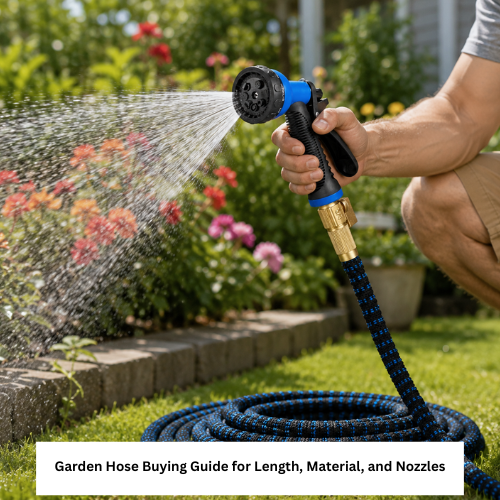
A suitable garden hose should reach the intended plants without being unnecessarily long, heavy, difficult to drain, or awkward to store. Buyers should compare route length, hose material, inside diameter, fitting type, flexibility, water pressure, temperature exposure, and nozzle compatibility before choosing.
A short hose can limit access, while an oversized hose adds weight, storage bulk, and possible pressure loss. Shop gardening tools buyers should measure the actual route from the faucet to the farthest watering point rather than estimating from yard size alone.
How to Choose a Garden Hose for Your Property
Map the planned hose route.
Measure from the faucet to:
- Garden beds
- Vegetable rows
- Containers
- Lawn edges
- Greenhouse
- Patio plants
- Driveway
- Cleaning area
- Hose storage point
Add only enough extra length to move around obstacles and reach plants comfortably.
Browse garden hoses when comparing standard, lightweight, expandable, and heavy-duty options.
Hose Type Comparison
| Hose type | Best use | Main advantage | Possible limitation | What to verify |
| Standard vinyl hose | Light occasional watering | Usually easy to handle | May kink or wear faster | Layer construction |
| Rubber hose | Frequent and demanding use | Flexible and durable | Often heavier | Weight and temperature range |
| Hybrid polymer hose | Everyday garden use | Balances flexibility and weight | Quality varies | Material and pressure rating |
| Expandable hose | Small spaces and light watering | Compact when drained | Requires suitable pressure and careful storage | Expanded length and fittings |
| Flat hose | Seasonal or portable use | Stores in limited space | Usually must be unrolled fully | Drainage and reel compatibility |
Compare Hose Materials
Vinyl
Vinyl hoses can be lightweight and manageable for basic watering. Check wall thickness, reinforcement, and temperature limits.
Rubber
Rubber may provide strong flexibility and durability but can be heavier to pull and lift.
Hybrid Polymer
Hybrid hoses are designed to combine flexibility with reduced weight, but the construction differs by product.
Expandable Fabric-Covered Hoses
Expandable hoses contract when drained and expand under water pressure.
A Flexi Hose expandable garden hose can help buyers compare a space-saving format, but verify the current length, pressure requirements, fittings, nozzle, warranty, and package contents.
Keep expandable products away from sharp edges, thorns, rough concrete, and prolonged pressure when not in use.
Choosing Fittings
Common fittings may use metal, plastic, or a combination of materials.
Inspect:
- Thread quality
- Connector size
- Grip surface
- Strain relief
- Gasket
- Shutoff valve
- Corrosion resistance
- Compatibility with the faucet and nozzle
A metal fitting is not automatically stronger when it is thin, poorly attached, or incompatible with another metal.
Use a suitable washer and avoid cross-threading.
Garden Hose Nozzle Compatibility
A nozzle controls the water pattern and can reduce unnecessary flow between plants.
Check whether the nozzle provides:
- Gentle shower
- Mist
- Cone
- Flat spray
- Jet
- Soaker
- Adjustable flow
- Trigger lock
- Thumb control
A high-force jet can damage seedlings, expose roots, splash soil onto leaves, or erode container mix.
Select a gentle setting for young plants and delicate flowers.
Expandable Hose Buying Tips
An expandable garden hose may be practical for a patio, balcony, small yard, or limited storage area.
Verify:
- Contracted length
- Expanded length
- Required pressure
- Maximum pressure
- Connector material
- Outer fabric
- Included nozzle
- Drainage instructions
- Storage instructions
- Repair or replacement policy
Do not store an expandable hose pressurized.
The Pocket Hose expandable model can help shoppers compare another compact format, but verify current dimensions, connection type, pressure requirements, nozzle inclusion, and seller information.
Setup and First Use
Before connecting:
- Inspect the hose for shipping damage.
- Check both fittings.
- Install washers.
- Clean the faucet threads.
- Hand-tighten the connection.
- Attach the nozzle.
- Turn on water gradually.
- Check every joint for leaks.
- Uncoil the hose fully.
- Test the nozzle patterns.
Avoid tightening fittings with excessive force, especially when threads are plastic.
Prevent Kinks and Twists
To reduce kinking:
- Unroll the hose in a straight line.
- Allow twists to relax.
- Avoid sharp bends at the faucet.
- Use a strain-relief spring when included.
- Do not pull around tight corners.
- Coil in large loops.
- Drain before storage.
- Keep vehicles off the hose.
Kink-free claims depend on pressure, temperature, handling, and material. Verify before buying.
Plant Watering Safety
Use lower flow around seedlings and loose soil.
Do not:
- Aim a strong jet at plant crowns.
- Leave water running unattended.
- create slippery walkways.
- Pull the hose across delicate plants.
- Drink from the hose unless the product is specifically approved for that use.
- Leave the hose where children can trip.
- Use a damaged hose around electrical equipment.
Turn the water off at the faucet after use.
Common Buying Mistakes
Buying Too Much Length
Extra hose increases weight, friction, coiling time, and storage needs.
Ignoring Hose Weight
A thick long hose may be difficult for the user to move.
Choosing by Material Name Alone
Layering, reinforcement, fittings, and manufacturing quality also matter.
Forgetting Nozzle and Reel Compatibility
Connections and capacity must match.
Leaving the Hose Under Pressure
This can stress fittings and the hose wall.
Storing It in Direct Sunlight
Heat and UV exposure may shorten material life.
Troubleshooting Common Problems
The Connection Leaks
Turn off the water and inspect the washer, threads, alignment, and fitting condition.
Water Flow Is Weak
Check for kinks, closed valves, clogged nozzles, long distance, small diameter, or low source pressure.
The Hose Twists Repeatedly
Drain it, straighten the full length, and coil it without tight loops.
The Nozzle Will Not Attach
Verify thread compatibility and inspect for damaged or crossed threads.
An Expandable Hose Does Not Reach Its Length
Check water pressure, flow restrictions, kinks, and the product’s measuring method.
The Hose Wall Bulges
Turn off the water immediately and replace the damaged product.
Cleaning and Maintenance
Regular care may include:
- Rinsing soil from the exterior
- Cleaning nozzle screens
- Replacing washers
- Checking fittings
- Draining after use
- Inspecting for cuts or bulges
- Protecting from freezing
- Keeping away from chemicals
- Coiling without tight bends
Do not patch a pressurized hose with an improvised repair when the damaged section could burst.
Warranty, Returns, and Support
Before buying, review:
- Hose warranty
- Fitting coverage
- Burst exclusions
- Kink exclusions
- Nozzle coverage
- Return window
- Used-product restrictions
- Repair-kit availability
- Replacement washers
- Delivery tracking
- Customer support
The Flexzilla garden hose listing can help buyers compare a hybrid hose design, but verify the current length, diameter, fittings, pressure rating, seller, and package contents.
Conclusion
The right garden hose should reach every watering area without creating unnecessary weight or storage problems. Measure the route, compare material and diameter, verify fittings and nozzle compatibility, and review drainage, maintenance, warranty, return, and replacement support before buying.
FAQ
What hose length should I buy?
Measure the real route from the faucet to the farthest plant and add only enough extra length for comfortable movement.
Is rubber better than vinyl?
Rubber is often durable and flexible but heavier. Vinyl can be lighter, while construction quality matters for both.
Are expandable hoses suitable for every garden?
They work well in some small spaces but require suitable pressure, careful handling, and correct storage.
Why does my hose leak at the faucet?
A missing washer, damaged threads, poor alignment, or a worn fitting may be responsible.
Should a hose remain connected during winter?
Follow local conditions and product guidance. Drain and protect it from freezing when required.
