Choosing the right watering tools helps gardeners deliver water at the correct location, flow, and pressure without damaging seedlings, compacting soil, or wasting time. A small balcony may need only a long-spout can, while a larger vegetable garden may require a hose, nozzle, wand, sprayer, or simple irrigation setup.
The best combination depends on garden size, water source, plant type, container height, user strength, storage space, and how frequently watering is needed. Shop gardening tools buyers should compare capacity, reach, flow control, materials, fittings, cleaning needs, and replacement support.
How to Select Watering Tools for Garden Areas
Watering tools should match the plant and growing environment.
Consider:
- Indoor plants
- Balcony containers
- Raised beds
- Vegetable rows
- Hanging baskets
- Seedlings
- Flower borders
- Shrubs
- Lawn areas
- Greenhouse plants
A broad garden watering equipment guide can help homeowners choose tools for different areas rather than relying on one item for every task.
Watering Tool Comparison
| Tool | Best suited to | Main advantage | Possible limitation | What to verify |
| Watering can | Containers and small beds | Precise, portable watering | Becomes heavy when full | Capacity and handle balance |
| Garden hose | Medium and large gardens | Long reach and continuous supply | Requires storage and careful routing | Length and fittings |
| Hose nozzle | Mixed watering and cleaning | Adjustable spray patterns | Strong settings can damage plants | Flow control and connection |
| Watering wand | Hanging baskets and deep beds | Extends reach with gentle flow | Can be awkward in tight storage | Wand length and shutoff |
Watering Cans
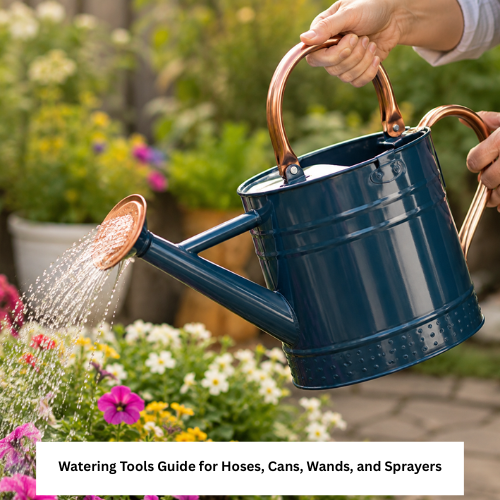
A watering can works well for containers, indoor plants, seedlings, and small garden sections.
Browse watering cans when comparing indoor, outdoor, long-spout, metal, and plastic options.
Check:
- Total capacity
- Weight when full
- Handle shape
- Fill opening
- Spout length
- Removable rose
- Flow control
- Storage height
- Material
- Replacement rose availability
A large can reduces refill trips but may become too heavy to carry steadily.
Long-Spout Watering Cans
Long spouts help reach beneath foliage and direct water toward the soil.
They are useful for:
- Indoor plant shelves
- Dense containers
- Succulents
- Hanging arrangements
- Balcony pots
- Seed trays
A long-spout watering can can help gardeners compare precise delivery, but verify its current capacity, material, removable sprinkler head, balance, and package contents.
The spout should not drip excessively after pouring or make the filled can difficult to balance.
Garden Hoses
A hose is useful when the watering area is too large for repeated can refills.
Check:
- Required length
- Hose diameter
- Fitting size
- Weight
- Kink resistance
- Water pressure
- Storage method
- Nozzle compatibility
Route the hose around beds rather than pulling it across plants.
Use hose guides or another suitable method when corners could crush stems.
Hose Nozzles
A hose nozzle can provide several water patterns.
Gentle settings suit:
- Seedlings
- Loose soil
- Fresh transplants
- Delicate flowers
- Container surfaces
Stronger settings may be used for suitable cleaning tasks but should not be aimed at fragile plants.
Check trigger comfort, thumb control, shutoff, spray pattern, thread compatibility, and replaceable washers.
Hand and Pump Sprayers
A hand sprayer is useful for misting, seedling care, or applying a product that specifically permits spray application.
A pump sprayer can hold more liquid but requires careful labeling and cleaning.
Browse garden sprayers when comparing containers intended for plant care or other approved garden use.
Never use the same sprayer for herbicide and plain plant watering unless the manufacturer and product labels permit safe decontamination.
Label every sprayer clearly.
Balcony and Small-Space Watering
For a balcony, choose tools that are:
- Compact
- Easy to fill
- Easy to carry
- Precise
- Drip controlled
- Simple to store
- Suitable for the nearest water source
A small watering can may be more practical than a hose when drainage and neighbor areas must be protected.
Use plant saucers where appropriate and avoid water running onto walkways below.
Large Garden Watering
Larger gardens may need a combination of:
- Hose
- Wand
- Nozzle
- Soaker hose
- Drip line
- Sprayer
- Watering can for spot work
The main tool handles routine coverage, while smaller tools provide precision around seedlings and containers.
Do not use high pressure to compensate for insufficient hose reach or poorly placed irrigation.
Common Buying Mistakes
Choosing Capacity Without Considering Weight
A large filled can or sprayer may be too heavy to carry safely.
Buying a Wand That Is Too Long
Extra reach can make storage and control difficult.
Using One Spray Pattern for Every Plant
Strong flow can erode soil and damage delicate growth.
Ignoring Fitting Compatibility
Hoses, nozzles, splitters, and wands may use different connections.
Mixing Products in One Sprayer
Residue from herbicides, cleaners, or fertilizers can damage plants.
Leaving Tools Pressurized
Pressure can stress seals, hoses, and fittings.
Troubleshooting Common Problems
The Watering Can Leaks
Inspect the seam, spout joint, rose connection, and fill opening.
The Nozzle Has Weak Flow
Check source pressure, hose kinks, clogged screens, washers, and nozzle settings.
The Wand Drips at the Connector
Replace or reseat the washer and inspect the threads.
The Sprayer Will Not Build Pressure
Check the lid seal, pump assembly, pressure valve, and internal tube.
The Spray Pattern Is Uneven
Clean the nozzle according to the instructions and remove mineral deposits carefully.
Water Runs Off the Soil
Reduce flow and water in shorter repeated stages.
Cleaning and Maintenance
After use:
- Empty watering cans and sprayers.
- Release sprayer pressure.
- Rinse only as directed.
- Clean nozzle openings.
- Dry metal tools.
- Replace worn washers.
- Inspect hoses for bulges.
- Check wand connections.
- Store tools out of freezing conditions.
- Keep chemical sprayers labeled separately.
The Qilebi watering can listing can help shoppers compare an indoor and outdoor watering format, but verify the current capacity, spout, sprinkler head, material, seller, and package contents.
Storage
Store equipment where it will not:
- Block paths
- Collect standing water
- Freeze
- Remain in strong sunlight
- Become a trip hazard
- Be reached by children
- Contact garden chemicals
- Damage delicate fittings
Hang wands and nozzles when appropriate. Coil hoses in broad loops and keep watering cans empty.
Warranty, Returns, and Replacement Support
Review:
- Warranty duration
- Pump and trigger coverage
- Hose and fitting coverage
- Leak exclusions
- Return window
- Used-item restrictions
- Replacement washers
- Replacement nozzles
- Replacement roses
- Pump rebuild kits
- Delivery tracking
- Customer support
Inspect every item before filling it with water or another permitted liquid.
Conclusion
The most useful watering tools match the garden size, plant needs, water source, and gardener’s strength. Combine precise cans or sprayers with suitable hoses and wands, use gentle flow around delicate plants, and review cleaning, storage, replacement parts, warranty, and return support before buying.
FAQ
Which watering tool is best for seedlings?
A small watering can with a gentle rose or a suitable fine sprayer can provide controlled flow.
Is a watering wand better than a nozzle?
A wand provides extra reach, while a nozzle is more compact. The better choice depends on the plants and layout.
Can one sprayer be used for fertilizer and herbicide?
Separate dedicated sprayers are safer because residue may remain even after cleaning.
What size watering can should I buy?
Choose a capacity that you can lift and pour steadily when completely full.
Why does water run off dry potting soil?
Very dry mix can repel water initially. Apply smaller amounts slowly and allow each stage to soak in.
