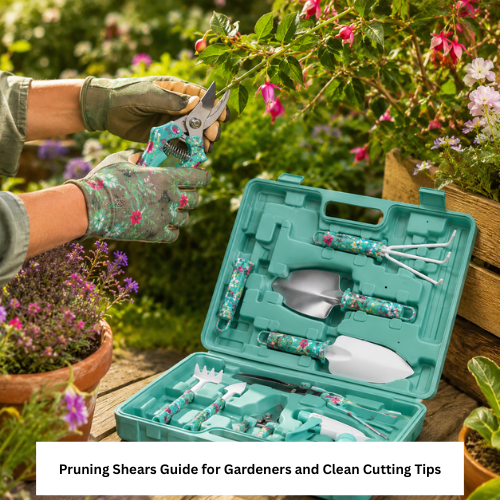
Pruning shears are essential for trimming stems, shaping plants, removing dead growth, harvesting flowers, and keeping garden plants manageable. The right pruning shears should match your hand size, plant type, cutting thickness, blade style, comfort needs, and maintenance routine.
Pruning shears are small tools, but choosing the wrong pair can make trimming uncomfortable or damage plants. Beginner gardeners should compare blade type, handle grip, spring action, safety lock, replacement parts, and cleaning needs before buying.
Why Pruning Shears Matter in the Garden
Clean pruning helps plants look better and can make garden maintenance easier. A sharp, comfortable tool can reduce hand strain and help you make cleaner cuts.
Pruning tools are useful for flowers, herbs, shrubs, houseplants, small branches, and vegetable garden maintenance. At shop gardening tools, gardeners can compare cutting tools, hand tools, gloves, and starter kits for everyday plant care.
How to Choose Pruning Shears
Pruning shears should be chosen by cutting style, blade sharpness, handle comfort, hand fit, lock design, and the type of plants you trim most often. Do not buy only by appearance because blade quality and grip comfort matter during repeated use.
Before buying, check:
- Bypass or anvil style
- Blade material
- Handle comfort
- Hand size fit
- Spring action
- Safety lock
- Cutting capacity listed by product
- Cleaning needs
- Replacement blades or springs if listed
- Return policy
| Tool Type | Best For | Buyer Benefit | Limitation | Verify Before Buying |
| Bypass pruners | Green stems and live plants | Cleaner slicing cut | Needs sharp blades | Blade alignment and lock |
| Anvil pruners | Dry or dead stems | Stronger crush-style cut | Can damage soft stems | Intended plant use |
| Snips | Herbs and delicate stems | Precise small cuts | Not for thicker stems | Blade size |
| Loppers | Thicker branches | More leverage | Bulkier than hand tools | Branch size guidance |
| Hedge pruning tools | Shaping hedges | Covers more area | Less precise | Blade length and handle control |
Garden Pruners for Everyday Trimming
A garden pruners category can help buyers compare hand tools for trimming flowers, herbs, shrubs, and small garden stems. For daily use, comfort and blade control matter as much as cutting strength.
If you have smaller hands, check handle width and spring resistance. If you prune often, choose a tool that feels comfortable during repeated cuts.
Bypass Pruners vs Other Cutting Tools
A bypass pruners option is often preferred for live stems because the blades pass by each other like scissors. This can create a cleaner cut when the tool is sharp and properly aligned.
Anvil-style tools may be useful for dry stems, but they can crush soft growth if used on the wrong material. Match the tool to the plant.
For product comparison, review grafting and pruning tool options and verify blade type, handle comfort, safety lock, cutting use, and return policy before buying.
Pruning Tools and Safety Checks
A pruning tools setup should include the right cutter, protective gloves, cleaning cloth, and a safe place to store sharp tools. Always lock the blades when the shears are not in use.
Safety tips:
- Keep fingers away from blades
- Wear gloves for thorny plants
- Do not force cuts that are too thick
- Store tools out of reach of children
- Clean blades after sticky or diseased plant material
- Follow all product instructions
Plant Trimming Tools for Different Tasks
Plant trimming tools should match the job. Use small snips for herbs and flowers, hand pruners for stems, and larger tools for thicker branches if appropriate.
Trying to cut branches that are too thick can bend blades, strain your hand, or damage the plant. If the cut feels forced, use a larger tool and verify the recommended capacity.
Gardening Cutting Tools Maintenance
Gardening cutting tools need regular cleaning and inspection. Sap, soil, rust, and dull edges can make cutting harder and less clean.
Maintenance tips:
- Wipe blades after use
- Dry tools before storage
- Check screws and springs
- Sharpen only as directed
- Oil moving parts if instructions allow
- Replace worn blades or springs if available
- Store tools closed and locked
Common Buying Mistakes
Avoid these mistakes:
- Buying without checking hand fit
- Using pruning shears for thick branches
- Ignoring safety lock quality
- Choosing dull or misaligned blades
- Not checking replacement parts
- Skipping cleaning and sharpening needs
- Forgetting warranty and return policy
Troubleshooting Pruning Shear Problems
If the tool crushes stems, the blade may be dull, misaligned, or the tool may be wrong for the plant. If the shears stick, clean sap from the blades and inspect the pivot.
If your hand hurts after pruning, check handle size, spring resistance, and whether you are forcing cuts beyond the tool’s intended use.
Practical Buying Checklist
Before buying, confirm:
- Size or fit: Handle width and grip match your hand size
- Compatibility: Tool suits flowers, herbs, shrubs, live stems, or dry stems
- Safety: Blade lock, grip, and storage method are clear
- Material or build quality: Blade, spring, pivot, handle, and lock look reliable
- Setup or installation: Ready-to-use steps, locking, and cleaning instructions are clear
- Maintenance: Sharpening, wiping, oiling, and storage steps are manageable
- Warranty: Verify before buying
- Return policy: Check before ordering
- Replacement parts: Verify blades, springs, screws, locks, or handles if listed
- Delivery or support: Confirm arrival before pruning season
- Verify before buying: Do not assume cutting capacity, blade type, hand fit, or replacement part availability
Conclusion
Pruning shears should feel comfortable, cut cleanly, lock safely, and match the plants you trim most often. Compare bypass pruners, blade style, handle comfort, maintenance needs, and return policy before choosing pruning shears for your garden.
FAQ
What are pruning shears used for?
They are used for trimming stems, flowers, herbs, shrubs, and small plant growth.
Are bypass pruners better for live plants?
Bypass pruners are often preferred for live stems because they can make cleaner slicing cuts.
How do I keep pruning shears sharp?
Clean them after use, dry them before storage, and sharpen only according to product instructions.
Can pruning shears cut branches?
They can cut small stems or branches within the tool’s listed capacity. Verify before buying or cutting.
What should I verify before buying?
Verify blade type, hand fit, cutting capacity, safety lock, replacement parts, warranty, and return policy.
