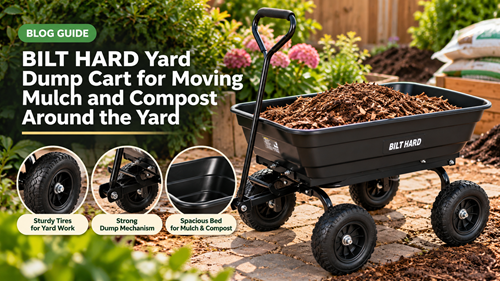

A BILT HARD Yard Dump Cart can reduce repeated carrying when mulch, compost, soil amendments, and garden waste must move between a driveway, pile, beds, and storage area. The useful capacity depends on bed volume and route control rather than the largest number in the listing.
Mulch and compost are easier to haul than dense gravel, but bulky loads can block visibility or spill around corners. Compare the cart width, wheel design, handle, dump action, and where the empty cart will be stored after the work is finished.
How to Evaluate BILT HARD Yard Dump Cart
Measure gates and narrow paths before comparing bed size. The cart must move through the route without scraping plants, walls, or raised beds.
Check how the handle moves during sharp turns and whether it can be stored without projecting into a walkway.
Plan unloading space. A dump bed needs room to tip and a stable destination where the load will not roll or spread unexpectedly.
BILT HARD Yard Dump Cart decisions are easiest to defend when the product is tested against the exact space, material, plant, or route described above rather than a generic maximum claim.
Six Buying Checks That Matter
Start with the BILT HARD Model
When comparing BILT HARD dump cart, Confirm the current model specifications for bed size, tires, rated load, handle, and dumping design.
Use the exact listing because similarly named yard carts can have different capacities and wheel configurations.
Plan Mulch Loads
When comparing mulch garden cart, Mulch often reaches the top of the bed before the weight limit, so volume and side height matter.
Keep the load below a height that blocks the route or falls out during turns.
Move Compost Cleanly
When comparing compost hauling cart, Compost can be moist and sticky, so consider how easily the bed can be dumped and cleaned after use.
Avoid leaving wet organic material against metal hardware or in corners where it can hold moisture.
Compare Dump-Wagon Handling
When comparing yard dump wagon, Compare steering geometry, tire size, latch location, and unloading angle with another dump-wagon design.
Choose the design that fits your turns and unloading area rather than assuming one steering layout works everywhere.
Read Capacity in Context
When comparing garden cart capacity, Capacity should be matched to material density and the user’s ability to pull and stop the cart.
Use smaller loads when the yard is wet, sloped, or uneven even if the frame is rated for more.
Use It for Landscaping Routes
When comparing garden cart for landscaping, A landscaping cart should move through the complete route from delivery pile to beds without repeated repositioning.
Measure turns around trees, steps, retaining walls, and vehicles before choosing a larger footprint.
Where It Fits Best
A side-by-side task check is more useful than a generic “best for everyone” verdict. Use the table below to match the product to normal work and then verify the current product instructions before use.
| Situation | Practical Fit | What to Watch |
|---|---|---|
| Mulch | High volume | Keep load contained |
| Compost | Medium volume | Clean wet residue |
| Soil amendment bags | Stacked load | Secure bags |
| Garden waste | Irregular volume | Avoid sharp branches |
| Tools and plants | Mixed load | Prevent shifting |
| Empty storage | No load | Handle footprint |
The table is intentionally conservative. The most reliable decision comes from matching the product to normal work rather than chasing the maximum capacity, longest reach, highest piece count, or strongest claim.
A Better Real-World Routine
Set up the work area before the first full task. Confirm the route, container, plant, soil condition, or material involved and use a light test first so fit and control can be checked without committing to the hardest job.
Keep a simple record of what worked: tool size, load, application amount, storage position, or setup. Repeatable decisions make future purchases and maintenance easier.
Before Each Use
- Measure gates
- Estimate mulch volume
- Check bed dimensions
- Compare tire tread
- Inspect steering clearance
- Review dump latch
- Plan cleanup
- Measure storage footprint
A repeatable routine makes comparison easier. Saving steps, improving control, or keeping a messy task organized without creating another problem are more meaningful advantages than a long list of secondary features.
Care, Storage, and Practical Limits
Brush or rinse organic residue as the manufacturer allows, dry the cart, inspect wheel hardware, and keep the dump mechanism clear of packed mulch and compost.
For broader technique and safety context, review Penn State Extension guidance on choosing garden tools that fit the work and user. Always give the current product label, manual, or manufacturer instructions priority for rates, loads, assembly, cleaning, storage, and replacement parts.
Who Should Choose It
This cart is best for homeowners who repeatedly move bulky mulch, compost, bagged amendments, garden waste, and light landscaping loads around a yard.
A good purchase should reduce friction in the garden routine. If another product type solves the task with fewer compromises, choose that alternative instead of paying for features you will not use.
Final Buying Takeaway
A BILT HARD Yard Dump Cart should make mulch and compost movement more controlled from loading through unloading. Measure the route first, then choose bed volume, tires, and dumping features that fit it.
BILT HARD Yard Dump Cart should be treated as a practical tool or product choice: verify current specifications, use the first few sessions as a test period, and keep the setup that remains controlled, easy to maintain, and consistent.
Frequently Asked Questions
Is mulch too light for a heavy-duty cart?
No. A large bed can be useful for bulky mulch even when the load is well below the weight limit.
Can I leave compost in the cart overnight?
It is better to unload and clean wet organic material so moisture does not remain against the bed and hardware.
What matters more, capacity or bed size?
Both matter. Mulch is volume-driven, while dense soil reaches weight limits faster.
Do I need pneumatic tires?
They can help on rough ground, but check maintenance needs and the exact model design.
Where should a dump cart be stored?
Store it dry where the handle and bed do not block walkways or vehicle space.
