
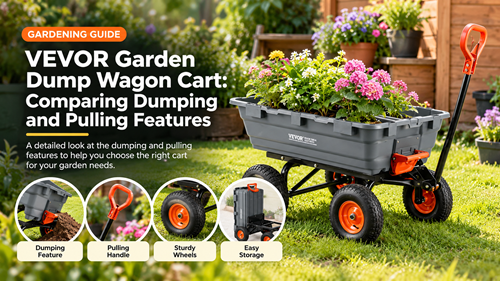

A VEVOR Garden Dump Wagon Cart combines hauling and dumping functions, so the important question is how those systems behave together under a realistic yard load. A large bed is useful only when the handle, steering, tires, and dump latch remain manageable on the route you use.
Compare the cart while imagining both directions of the job: pulling a loaded wagon to the destination and controlling the bed while unloading. Storage, cleanup, and turning room should be part of the same decision.
How to Evaluate VEVOR Garden Dump Wagon Cart
Pulling effort depends on load, tire resistance, terrain, and handle position. The same cart can feel easy on pavement and difficult on soft soil.
Dumping should be deliberate. The latch must be reachable without placing hands in the movement path of the bed or load.
Turning radius matters around raised beds, gates, sheds, and vehicles. Check route width before comparing only straight-line capacity.
VEVOR Garden Dump Wagon Cart decisions are easiest to defend when the product is tested against the exact space, material, plant, or route described above rather than a generic maximum claim.
Six Buying Checks That Matter
Review the VEVOR Cart
When comparing VEVOR dump cart, Use the current listing to confirm rated load, bed size, tire type, handle design, and dump mechanism for the exact model.
VEVOR sells multiple cart configurations, so avoid transferring specifications from a similar-looking version.
Test the Dumping Routine
When comparing garden wagon dumping, A useful dump system should release predictably and allow the bed to return to a secure lock after unloading.
Practice with a light load before using dense soil or gravel so the tipping motion does not surprise the user.
Compare Other Dump Carts
When comparing dump garden cart, Compare dumping angle, latch location, bed material, and wheel layout rather than focusing only on capacity.
A simpler cart can be easier to maintain when the extra features do not change your normal route or material.
Evaluate the Yard Route
When comparing yard wagon cart, Walk the route from storage to loading point and destination. Measure gates, sharp turns, and the narrowest passage.
If the route includes slopes, plan smaller loads and avoid parking where a loaded wagon can roll.
Match Hauling to Terrain
When comparing garden hauling cart, Tire diameter and tread affect how the cart crosses gravel, grass, roots, and small edges.
Large tires can improve obstacle clearance but also increase storage width and the effort needed for tight turns.
Confirm the Exact Wagon
When comparing VEVOR garden wagon, Verify that the model shown in the listing matches the configuration you intend to order, including wheel and handle style.
Save the manual or product information for future replacement hardware, maintenance, and safe load guidance.
Where It Fits Best
A side-by-side task check is more useful than a generic “best for everyone” verdict. Use the table below to match the product to normal work and then verify the current product instructions before use.
| Situation | Practical Fit | What to Watch |
|---|---|---|
| Flat lawn | Moderate loads | Tire roll |
| Gravel path | Smaller controlled loads | Tread and vibration |
| Raised-bed aisles | Compact turns | Overall width |
| Mulch hauling | High-volume loads | Bed size |
| Soil hauling | Lower-volume loads | Weight control |
| Storage | Empty cart | Handle and bed footprint |
The table is intentionally conservative. The most reliable decision comes from matching the product to normal work rather than chasing the maximum capacity, longest reach, highest piece count, or strongest claim.
A Better Real-World Routine
Set up the work area before the first full task. Confirm the route, container, plant, soil condition, or material involved and use a light test first so fit and control can be checked without committing to the hardest job.
Keep a simple record of what worked: tool size, load, application amount, storage position, or setup. Repeatable decisions make future purchases and maintenance easier.
Before Each Use
- Verify exact model
- Measure route width
- Compare bed volume
- Check tire type
- Review handle position
- Inspect dump latch
- Plan parking method
- Save manual details
A repeatable routine makes comparison easier. Saving steps, improving control, or keeping a messy task organized without creating another problem are more meaningful advantages than a long list of secondary features.
Care, Storage, and Practical Limits
Clean material from the bed and pivot area, inspect wheel hardware, and keep the dump latch free of packed soil. Follow the current VEVOR instructions for lubrication, tire care, and storage.
For broader technique and safety context, review VEVOR current garden-cart product information for model-specific specifications. Always give the current product label, manual, or manufacturer instructions priority for rates, loads, assembly, cleaning, storage, and replacement parts.
Who Should Choose It
This cart suits users who want one wagon for moving bulky garden material and prefer a dump bed that can reduce manual shoveling at the destination.
A good purchase should reduce friction in the garden routine. If another product type solves the task with fewer compromises, choose that alternative instead of paying for features you will not use.
Final Buying Takeaway
A VEVOR Garden Dump Wagon Cart should be chosen by the full hauling cycle: loading, pulling, turning, dumping, returning, and storage. The best specification is the one that improves those repeated steps safely.
VEVOR Garden Dump Wagon Cart should be treated as a practical tool or product choice: verify current specifications, use the first few sessions as a test period, and keep the setup that remains controlled, easy to maintain, and consistent.
Frequently Asked Questions
Does a dump wagon replace a wheelbarrow?
It can handle many hauling jobs, but maneuverability and unloading style differ from a wheelbarrow.
What should I check first on a VEVOR cart?
Confirm the exact model, rated load, tire type, handle design, and dump mechanism.
Can I use the maximum load on a slope?
Use conservative loads and follow the manufacturer guidance; slopes reduce control and increase rolling risk.
Do bigger tires always help?
They can improve obstacle clearance but may increase width and turning space.
How should the dump latch be maintained?
Keep it clean, inspect hardware, and follow the manufacturer lubrication and adjustment instructions.
