
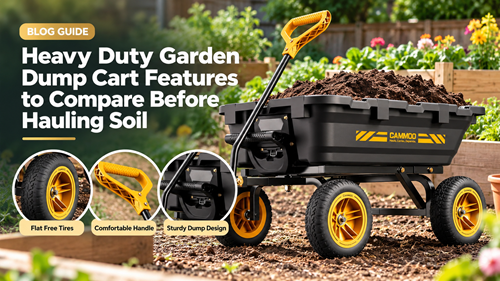

A Heavy Duty Garden Dump Cart should be evaluated for the material you plan to haul, not the largest capacity printed in the headline. Soil, gravel, compost, mulch, firewood, and potted plants place very different loads on the bed, tires, frame, and user.
Wet soil becomes heavy quickly, and a cart that can carry the weight may still be difficult to pull or control on slopes. Compare rated load, bed volume, wheel design, dump mechanism, turning radius, and route before buying.
How to Evaluate Heavy Duty Garden Dump Cart
Capacity should be treated as a limit, not a target. Dense materials can reach the weight limit before the bed is physically full.
Terrain changes the effort required. Soft soil, gravel, roots, and slopes place more demand on tires and steering than a flat driveway.
The dump feature should release under control and return securely to the locked position after unloading.
Heavy Duty Garden Dump Cart decisions are easiest to defend when the product is tested against the exact space, material, plant, or route described above rather than a generic maximum claim.
Six Buying Checks That Matter
Start with the Cart Type
When comparing garden dump cart, Compare the current bed size, rated load, tire design, handle, and dump mechanism with the jobs you actually plan to do.
Do not use the maximum load rating as a normal working target when the route includes slopes or soft ground.
Compare Heavy-Duty Options
When comparing heavy duty garden cart, Heavy-duty construction can add frame strength and larger tires, but it can also increase empty weight and storage needs.
Make sure the cart remains practical to move, turn, and store when it is not carrying a load.
Plan Soil Loads
When comparing soil hauling cart, Soil density varies with moisture, so a bed that looks half full can already be a substantial load.
Move smaller loads when traction or control becomes uncertain rather than relying on the cart rating alone.
Compare Wagon Designs
When comparing yard dump wagon, A wagon-style steering system can improve maneuverability on open routes, while tight beds may expose turning limitations.
Check how the handle behaves when reversing or turning under load and whether it can be parked securely.
Match the Cart to Mulch
When comparing garden cart for mulch, Mulch is bulky but generally lighter than wet soil, so bed volume can matter more than maximum weight for that job.
Check side height and dumping angle so loose material leaves the bed without excessive shaking or lifting.
Read Capacity Correctly
When comparing dump cart capacity, Compare both weight capacity and bed volume because they answer different questions.
Use the lower practical limit created by terrain, user control, and material density rather than filling to a headline number automatically.
Where It Fits Best
A side-by-side task check is more useful than a generic “best for everyone” verdict. Use the table below to match the product to normal work and then verify the current product instructions before use.
| Situation | Practical Fit | What to Watch |
|---|---|---|
| Wet soil | High density | Use smaller loads |
| Mulch | High volume | Bed size matters |
| Compost | Medium density | Clean bed afterward |
| Gravel | Very dense | Tire and frame stress |
| Pots and tools | Mixed load | Secure items |
| Firewood | Irregular load | Stack below safe control height |
The table is intentionally conservative. The most reliable decision comes from matching the product to normal work rather than chasing the maximum capacity, longest reach, highest piece count, or strongest claim.
A Better Real-World Routine
Set up the work area before the first full task. Confirm the route, container, plant, soil condition, or material involved and use a light test first so fit and control can be checked without committing to the hardest job.
Keep a simple record of what worked: tool size, load, application amount, storage position, or setup. Repeatable decisions make future purchases and maintenance easier.
Before Each Use
- Estimate heaviest load
- Check rated capacity
- Compare bed volume
- Choose tire type
- Measure turning space
- Test handle height
- Inspect dump latch
- Plan dry storage
A repeatable routine makes comparison easier. Saving steps, improving control, or keeping a messy task organized without creating another problem are more meaningful advantages than a long list of secondary features.
Care, Storage, and Practical Limits
Remove wet soil from the bed and frame, rinse only as the manufacturer allows, dry metal components, and inspect tire pressure or wheel hardware before the next heavy load.
For broader technique and safety context, review Penn State Extension guidance on matching garden tools to the user and job. Always give the current product label, manual, or manufacturer instructions priority for rates, loads, assembly, cleaning, storage, and replacement parts.
Who Should Choose It
This setup fits gardeners and homeowners who regularly move soil, compost, mulch, firewood, plants, or landscaping material over a defined yard route.
A good purchase should reduce friction in the garden routine. If another product type solves the task with fewer compromises, choose that alternative instead of paying for features you will not use.
Final Buying Takeaway
A Heavy Duty Garden Dump Cart is valuable when its capacity, tires, steering, and dump mechanism match the route and material. Choose control and repeatable handling before chasing the largest rating.
Heavy Duty Garden Dump Cart should be treated as a practical tool or product choice: verify current specifications, use the first few sessions as a test period, and keep the setup that remains controlled, easy to maintain, and consistent.
Frequently Asked Questions
How much soil should I put in a dump cart?
Use the cart rating and consider soil moisture, slope, tire traction, and your ability to control the load.
Are pneumatic tires better?
They can improve ride quality on rough ground but require pressure checks and may puncture.
Is a larger bed always better?
No. Larger beds need more storage and can encourage loads that are difficult to control.
What should I inspect on the dump mechanism?
Check latch engagement, pivot hardware, and whether the bed returns securely to the locked position.
Can I haul gravel at the same volume as mulch?
Usually not. Gravel is much denser, so the weight limit can be reached with a much smaller volume.
