
Collapsible Portable Wagon Cart is worth judging by the job it needs to do in a real garden, not by a single headline specification. For suburban gardeners who need a cart that can haul bulky supplies without occupying permanent floor space, the useful buying questions are storage, handling, materials, routine fit, and the limits that appear once the product is used around soil, water, plants, paths, or outdoor storage.
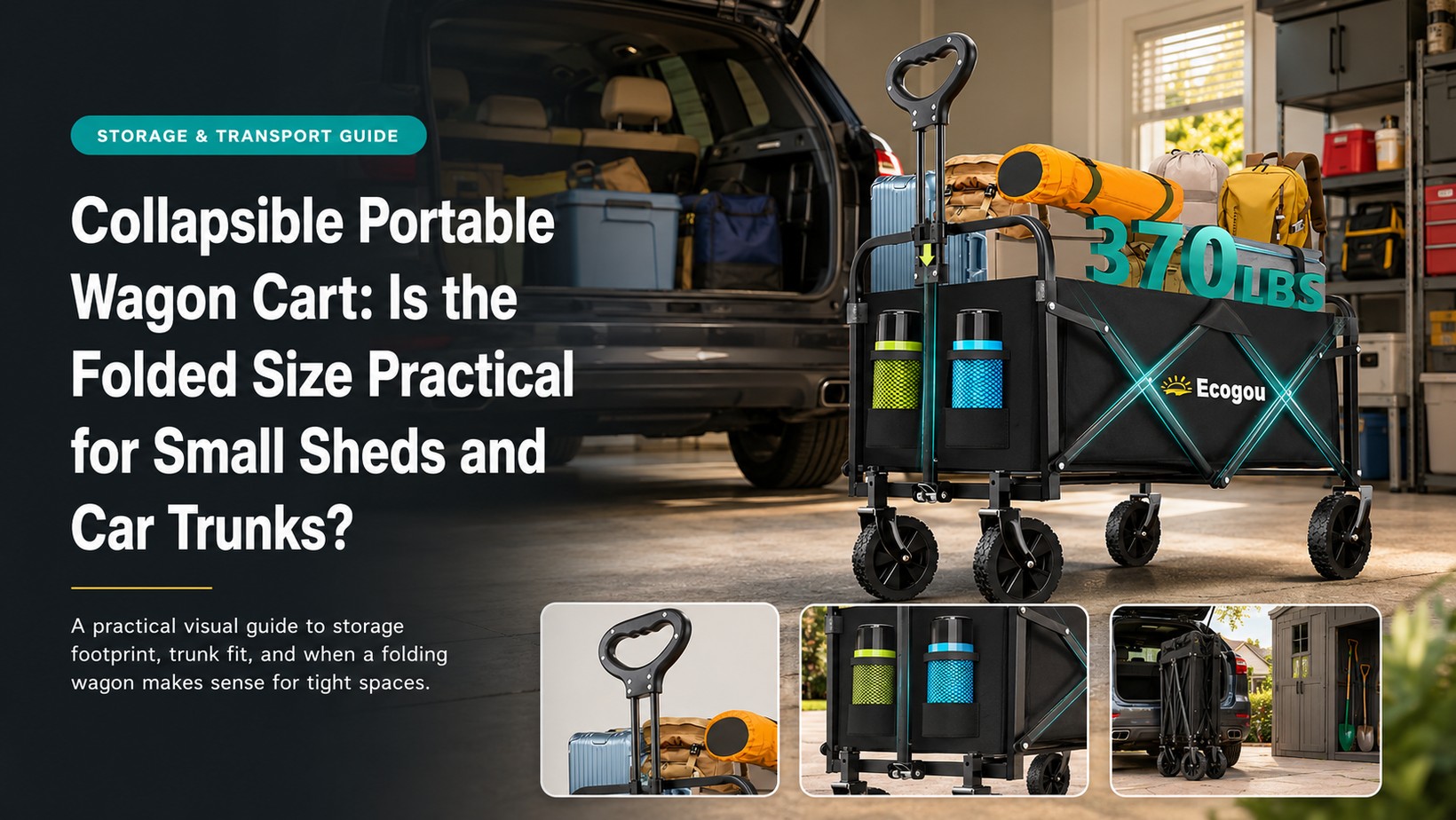
This guide focuses on the supplied product information and practical garden use. The useful question is not whether the wagon folds, but whether its folded footprint, handle position, wheel bulk, and 125-liter cargo body fit the storage space you actually have. The listed steel frame, 600D Oxford fabric, four swivel wheels, telescopic handle, and no-assembly setup make it practical for repeated yard trips, while the claimed 360-pound maximum load should still be treated as an upper rating rather than a target for every surface. The goal is a realistic decision based on the work, not a marketing promise.
How to Evaluate Collapsible Portable Wagon Cart
The first step is to translate specifications into the work you actually do. A home gardener may use the same item very differently from a nursery, landscape crew, or large-property owner. Start with the product’s physical format, then consider the surface, plant size, storage, frequency of use, and whether the job is repeated enough for convenience to matter.
The supplied product record highlights these practical details: 125-liter cargo space with a detachable inner bag; double-layer 600D Oxford fabric on a steel frame; four swivel wheels and a telescopic pull handle; listed maximum load of 360 pounds; folding design that requires no assembly for normal setup. None of these details should be considered in isolation. Capacity can be less useful when access is tight, lightweight construction can be less important when the task needs leverage, and a rich growing medium can be the wrong choice for a plant that needs leaner or faster-draining conditions.
For suburban gardeners who need a cart that can haul bulky supplies without occupying permanent floor space, the best test is a normal working day. Imagine where the product starts, how it reaches the task, what must be carried or measured, where it will be cleaned, and where it will sit afterward. That sequence reveals whether the convenience is real.
Five Buying Checks That Matter
Storage and Space
When you compare folding wagon storage size, Measure the folded height, width, and depth against the exact shelf, wall gap, or shed corner rather than judging compactness from an open-wagon photo. This matters because a product that performs well only in ideal conditions can still create more work when storage, access, cleaning, or setup is ignored.
Handling and Control
When you compare garden cart trunk fit, A trunk test should include the folded wheels and handle, because those parts often determine whether the cart sits flat beside groceries, tools, or nursery purchases. This matters because a product that performs well only in ideal conditions can still create more work when storage, access, cleaning, or setup is ignored.
Task Match
When you compare compact yard hauling wagon, Compact storage is most valuable when the wagon can still carry the mulch bags, pots, hand tools, and cleanup loads that would otherwise require several walking trips. This matters because a product that performs well only in ideal conditions can still create more work when storage, access, cleaning, or setup is ignored.
Routine Efficiency
When you compare portable wagon for mulch bags, For bagged mulch or soil, load shape matters as much as total weight: keep dense bags low, center them over the wheelbase, and avoid stacking above the sidewalls where the load can shift. This matters because a product that performs well only in ideal conditions can still create more work when storage, access, cleaning, or setup is ignored.
Long-Term Practicality
When you compare collapsible cart shed storage, Before buying, decide whether the folded cart will stand vertically, hang safely, or sit on the floor without blocking mower, hose, or door access. This matters because a product that performs well only in ideal conditions can still create more work when storage, access, cleaning, or setup is ignored.
Where It Fits Best
A side-by-side task check is more useful than a generic “best for everyone” verdict. Use the table below to identify the situation closest to your own garden and then verify the product instructions before use.
| Situation | Practical Fit | What to Watch |
|---|---|---|
| Small shed | Folded footprint and vertical stability | Measure the intended storage bay first |
| Car trunk | Wheel and handle bulk when folded | Test available trunk height and depth |
| Mulch and soil bags | Low centered load | Stay below the practical surface limit |
| Potted plants | Flat base and gentle turns | Protect pots from sidewall movement |
| Uneven yard paths | Wheel clearance and steering | Slow down before ruts and thresholds |
The table is intentionally conservative. The most reliable decision comes from matching the product to normal work rather than chasing the maximum capacity, strongest claim, longest reach, or richest formula.
A Better Real-World Routine
Plan the route before loading. Place heavy bags or pots closest to the center of the wagon, keep the handle path clear, and make two moderate trips instead of one unstable trip when the yard is sloped or soft.
Before Each Use
- Check the product and working area for obvious damage or obstacles
- Confirm the task is within the listed size, capacity, or application limits
- Set up the route, container, plant, or work surface before starting
- Use controlled movements or measured amounts instead of forcing the task
- Pause when conditions change rather than continuing automatically
- Clean, drain, dry, or store the item according to its material and instructions
A repeatable routine makes comparison easier. Saving steps, improving control, or keeping a messy task organized without creating another problem are more meaningful advantages than a long list of secondary features.
Care, Storage, and Practical Limits
Brush soil from wheel pivots and fabric after dirty jobs, let damp fabric dry before folding, and inspect fasteners, handle locks, and wheel movement before storing the wagon for a long period.
For broader technique and manufacturer context, review garden cart ergonomics. Penn State Extension discusses reducing strain in garden work; its broader ergonomic advice is useful when deciding whether a cart can reduce repetitive carrying. Always give the current product label or manufacturer instructions priority for rates, loads, assembly, cleaning, storage, and safety.
Who Should Choose It
Choose this style when storage is tight but you regularly move bags, pots, harvest baskets, tools, or cleanup debris. A rigid dump cart may be a better fit when loads are consistently very heavy, sharp, or moved over rough ground.
A good purchase should reduce friction in the garden routine. If another product type solves the task with fewer compromises, choose that alternative instead of paying for features you will not use.
Final Buying Takeaway
Collapsible Portable Wagon Cart should be selected for task fit first and specifications second. The useful features are the ones that support the way you already garden without creating new storage, handling, maintenance, or application problems.
Treat the first few uses as a verification period: pay attention to control, cleanup, storage, comfort, and whether the result is consistent.
Frequently Asked Questions
Will the wagon fit in every small car trunk?
No. Folded dimensions and trunk openings vary, so measure the real cargo opening and allow space for the wheels and handle.
Is the 360-pound rating suitable on soft lawn?
A maximum rating does not guarantee easy movement on every surface. Soft soil, slopes, and wheel sink can reduce the practical load.
Can it carry mulch bags?
Yes, the wagon format is suitable for bagged garden materials when the load is centered and kept within the manufacturer limits.
Should the fabric be folded while damp?
It is better to let the fabric dry first to reduce odor, staining, and trapped moisture.
Does a folding wagon replace a wheelbarrow?
Not always. Wagons are convenient for stable loads and storage, while wheelbarrows may handle some loose material and narrow paths better.
