
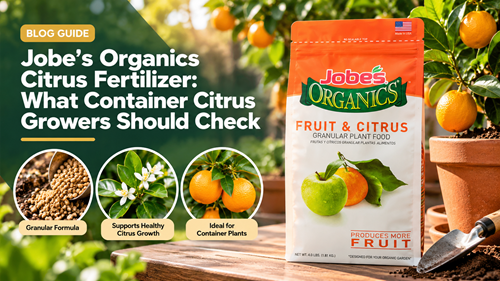

Jobe’s Organics Citrus Fertilizer can be a practical granular option for container citrus, but pot-grown trees have less soil volume and a different watering pattern than trees planted in the ground. The right rate and timing depend on the current label, container size, growing season, plant condition, and existing nutrients in the potting mix.
More fertilizer is not a shortcut for poor drainage, low light, root stress, or incorrect watering. Container growers should read the guaranteed analysis and directions, measure the product, and record application dates instead of feeding from memory.
How to Evaluate Jobe’s Organics Citrus Fertilizer
Check the N-P-K analysis and understand that the numbers are percentages of major nutrients, not a direct schedule for every plant.
Container citrus is watered more frequently than many in-ground trees, which can affect nutrient movement and salt accumulation.
Observe growth, leaf color, drainage, and root condition before increasing fertilizer. Symptoms can have several causes.
Jobe’s Organics Citrus Fertilizer decisions are easiest to defend when the product is tested against the exact space, material, plant, or route described above rather than a generic maximum claim.
Six Buying Checks That Matter
Choose Fertilizer for Pots
When comparing citrus fertilizer for pots, Container products should be compared by nutrient analysis, application method, and the amount of control they provide over small root volumes.
A concentrated formula may require careful measuring, while a granular product requires even distribution and correct watering.
Match Container Conditions
When comparing container citrus fertilizer, Use the current Jobe’s label to confirm rate and frequency for the exact package.
Do not assume an in-ground tree rate can be transferred directly to a pot without checking the directions.
Evaluate Lemon-Tree Needs
When comparing fertilizer for lemon trees, Lemon trees need balanced care that includes light, drainage, irrigation, and suitable potting media in addition to nutrients.
If leaves yellow, investigate watering, root health, temperature, and pests before adding more fertilizer automatically.
Compare Organic Plant Food
When comparing organic citrus plant food, Organic granular products can release nutrients differently from soluble formulas, so follow their specific directions.
Store the bag dry and sealed, and use a dedicated scoop so the measured rate remains consistent.
Track Feeding Timing
When comparing citrus fertilizer timing, Record application dates and plant growth so the next feeding decision is based on the previous dose and current condition.
Reduce feeding when growth slows unless the label or a local horticultural recommendation directs otherwise.
Coordinate Feeding with Water
When comparing feeding potted citrus, Watering controls how nutrients move through container media. Follow the fertilizer directions and avoid applying concentrated product to a severely dry stressed root ball.
Make sure excess water can drain so dissolved salts do not remain trapped in a saturated container.
Where It Fits Best
A side-by-side task check is more useful than a generic “best for everyone” verdict. Use the table below to match the product to normal work and then verify the current product instructions before use.
| Situation | Practical Fit | What to Watch |
|---|---|---|
| Active growth | Common feeding period | Follow label interval |
| Fresh repotting | Check potting mix first | Media may contain fertilizer |
| Very dry stressed plant | Delay feeding | Correct water stress first |
| Container with frequent irrigation | Monitor closely | Nutrient movement changes |
| Slow winter growth | Often less feeding | Match actual growth |
| Yellow leaves | Diagnose first | Several causes possible |
The table is intentionally conservative. The most reliable decision comes from matching the product to normal work rather than chasing the maximum capacity, longest reach, highest piece count, or strongest claim.
A Better Real-World Routine
Set up the work area before the first full task. Confirm the route, container, plant, soil condition, or material involved and use a light test first so fit and control can be checked without committing to the hardest job.
Keep a simple record of what worked: tool size, load, application amount, storage position, or setup. Repeatable decisions make future purchases and maintenance easier.
Before Each Use
- Read guaranteed analysis
- Check container size
- Review potting mix nutrients
- Measure fertilizer
- Keep granules off trunk
- Water as directed
- Record application date
- Watch drainage and leaf response
A repeatable routine makes comparison easier. Saving steps, improving control, or keeping a messy task organized without creating another problem are more meaningful advantages than a long list of secondary features.
Care, Storage, and Practical Limits
Keep the fertilizer bag sealed and dry, use a clean scoop, and do not store granules where moisture or children can reach them. Follow the current product label for disposal and safety.
For broader technique and safety context, review University of Minnesota Extension guidance on growing citrus in containers. Always give the current product label, manual, or manufacturer instructions priority for rates, loads, assembly, cleaning, storage, and replacement parts.
Who Should Choose It
This product suits container citrus growers who prefer a measured granular feeding routine and are willing to track pot size, watering, and application timing.
A good purchase should reduce friction in the garden routine. If another product type solves the task with fewer compromises, choose that alternative instead of paying for features you will not use.
Final Buying Takeaway
Jobe’s Organics Citrus Fertilizer should be used as one part of container citrus care. Follow the label, measure the rate, coordinate feeding with watering and growth, and diagnose stress before increasing nutrients.
Jobe’s Organics Citrus Fertilizer should be treated as a practical tool or product choice: verify current specifications, use the first few sessions as a test period, and keep the setup that remains controlled, easy to maintain, and consistent.
Frequently Asked Questions
Can Jobe’s citrus fertilizer be used in pots?
Use the current label directions for container citrus and match the rate to the pot and plant.
How often should container citrus be fertilized?
Follow the product label and adjust the broader care routine to active growth and plant condition.
Does yellow foliage always mean more fertilizer is needed?
No. Watering, root problems, light, temperature, pests, and nutrient issues can all affect leaf color.
Should granules touch the trunk?
Avoid concentrated fertilizer against the trunk unless the label specifically directs that placement.
Why record fertilizer dates?
A record prevents accidental overapplication and helps you compare plant response between feedings.
